
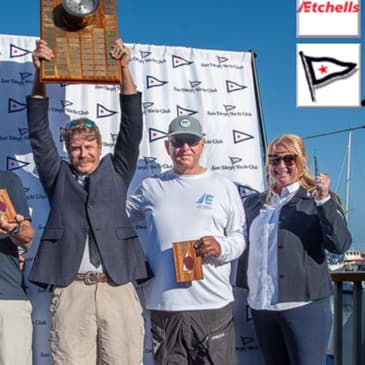
Here's the second part of my chat with Luke Lawrence, in which we dive into a masterclass on racecourse strategy and mindset. We began with Luke's thoughts on a systems-based approach to improvement and ended with a deep discussion on upwind strategy options, successfully rounding the upwind mark and then downwind strategy and tactics. As always, he's an excellent coach and an entertaining guest. Audio is a bit dodgy, sorry, but hopefully after a bit you won't even notice...
[00:00:09] Hello and welcome back to Sailfaster, the podcast for those who obsess about sailing faster. So in this second episode with professional sailor and coach Luke Lawrence, we're going to get tactical. Luke shares a masterclass on consistency, mindset and executing the fundamentals that win races, starting with a discussion about sleep strategies offshore and ending with how to defend against the downwind train.
[00:00:34] Along the way, he offers some pretty brutal honest insights about personal growth, the power of systems and the mental game that separates good sailors from great ones. Whether you're racing Etrials, J70s or just trying to move up the Perth fleet, this conversation is packed with lessons you can take straight to the race course. Again, I wish the audio was a little better, but it seems that most of you heard part one of my chat with Luke reasonably okay.
[00:01:02] And what's more important, seemed to really enjoy it. Here we go. When we last talked to you, you talked about keeping everything chill around you. That was your way of doing it. That notion of flow as well, trying to flow through life as much as you can, which I thought was really interesting.
[00:01:26] When you're on the race course, it's high intensity. When do you find moments to go from 99% down to 70% or 80%? Is that just between races or...? No, it's over the course of a race. It's like, how long can you make your body last for two and a half hours at maximum performance?
[00:01:45] Yeah. It's like, look, it's like in a race car. Yeah, you can go a little faster. You can push a couple hundred extra RPM. But if you blow a rod and you shoot a piston out in your final corner and you still get third... Yeah. You have to back off at some point. Yeah. ...but the only good trophy is the guy who finished first. Yeah.
[00:02:07] You know, so being able to pace yourself and then like offshore, mentally, same thing. You know, there's the times where the intensity needs to be there. But one of the hardest things for offshore guys is sleeping. For a lot of them. When to sleep. When's the right time. And if you can, you know, it's such a fundamental part of humans. And yeah, there's those odd ones out there that can like, you know, some of the Frenchies that seem like they just never sleep.
[00:02:32] But I think it's perspective. They know when to sleep, you know, they know how to look far enough on the weather and be like, okay, odds are we're not going to have a huge shift. I can trust the autopilot. I can trust the safety on the main release and try and get 20 minutes here. Meanwhile, they're in the sub notion. Yeah. It's blowing 55 knots. They're doing 35 knots. They might not be as wet now, but they're definitely not as comfy. I don't think.
[00:02:58] They can't get it over with faster now that they're, they're foiling. But at the end of the day, when they come down and smash, they smash more. Yeah. I had a really interesting conversation with, you know, Pip Head, the British woman solo sailor and just talking to her about how you sleep in those conditions. I don't, don't get it. They're amazing people.
[00:03:18] For somebody like me, who's trying to accelerate their learning to try and get up to pace with the rest of the fleet. Any advice thoughts on how to do that, whether mentally, rationally or, you know. I think developing a system and having a couple of key factors that you implement repetitively in that system, being able to go out and make mistakes. And then that's easy.
[00:03:47] It's easy, but how do you keep yourself from repeating them is, is the trick. And having a simple system of, say, you want to have perfect boat handling. You have to go out and you do small groups of tacks. You do three or four or five of them, and then be willing to stop and sit down with the team and having somebody, you know, a pro around or somebody on the boat who's done it a lot.
[00:04:13] They don't have to be a pro, but somebody that is in charge of the basics of the fundamentals of boat handling is an easier way to make big gains in a short amount of time. Is go out and do those five tacks. If you have the ability to do video camera and sit down with somebody after and break them down, that's how you get to the ability where the 120 pound person doesn't step on the sheet and mess it up.
[00:04:39] Every single person on that boat, it helps a lot if they're all on that same wanting to learn page. But being able to stop, analyze, take human emotion out of it, get rid of ego. That completely, your ego is like, it can be perceived as a good thing sometimes, but I found a majority of the time it just, it's your nail in your own coffin.
[00:05:05] That is, and like I said, that, that developed in the fin for a lot of young guys is you have to have that ego to push yourself to the physical limit for that long of a period of time. And then just be by yourself. You're in your own head. You're like, essentially, if you're a good fin sailor, you develop how to be like crazy. You have to be crazy. You have conversations with yourself.
[00:05:29] You're like, you're, you're torturing your body on your own with your own free will for hours and hours and hours and hours. And that takes a little something, takes a little something twisted in you to think you're going to be successful. But it's, it's a repeat. This is a game of repeatable processes getting better and better. How easily can you replicate? Yeah. It's, it's easy to replicate failure or perception of failure.
[00:05:54] I should say, if you can change your perception to say that we're here to learn and to get better, that bad tack is just something ingrained in the memory along the golden brick road that got you up to where you are. When you do get on that podium, you get to look back and you get to appreciate those little things. And that's like a big part of team dynamic that I love being a part of is, is building that and growing it and watching it and turn around and be like, look what we did together.
[00:06:21] The trophies are nice and all, but like the, the building, the team and getting there and then, and then the bonus of winning on top. It's, it's pretty cool, but no, definitely develop a system for your team that allows for easy replication. And at the end of the day, all you're doing is getting off the line. Want to have a good first tack outside of that. After that, once you pass that and you want to have another good tack.
[00:06:48] And then you have to that, you know, you're, you're, you're just every little move, do it with intention. And you develop that muscle memory. And then all of a sudden, when you're in the heat of battle, you're just out there practicing, but they got horns on either end, you know? I think I've said this on a podcast before, but there's quite revelation to me at the beginning of the year. And we had our Zoom call as a team. And I've been lucky enough to retain the same team now for a couple of years, which is, which is great.
[00:07:14] And because I sort of have a corporate background, it was, let's set out the goals and purpose of, you know, why we're here. And so for me, it would be great to be in the top half of the fleet. And that was, that was sort of the goal to my mind. And my team immediately shot me down on this quite rightly. And they're like, don't worry about that. Let's just set goals for good starts, good taps, good mark roundings. That stuff's going to come. So I thought that was very wise. And so that's, that's what we've been doing. The only, the only things we found out the other day, we had some great starts in our first regatta.
[00:07:43] Fabulous starts. But then the next thing is, how do you hold the light, how do you hold the light, right? It's sort of, okay, we got into a rhythm of being, doing quite good starts. But then it's, it just pushes you into what's the next thing to solve, what's the next thing to solve. And so it's interesting. It brings me to, you know, even at a high level, you're still focusing on the basics. Everything is about doing the basics to the best of your ability all the time. And what really separates first from fourth is usually boat speed.
[00:08:11] You know, Russell Coop said that boat speed makes you look like a tactical genius. Yeah. And, and. You can cover up your errors, but if you have good boat speed. And a lot of the guys up at the front, you know, they're not really making mistakes. They're not missing, you know, the generically obvious, you know, but one thing they are doing is the basics perfectly every time. Yeah. And they've done it enough where, you know, maybe looking from the back of the fleet, looking up at that, you know, you might know how they do it, you know, this and that.
[00:08:40] But at the end of the day, they're not beefing any tanks. You know, they have perfect jives, perfect takedowns, perfect lured mark roundings. That sets them up for the long term. You've got to have a good mark rounding if you want to hold a lane out of the bottom gate. It's hard to conceptualize how many of these little tiny pieces add up to what gets you to the front. Yeah. You know, everybody sees that he just wants to take the snapshot of, oh, I just have a good start. I'll be fine. I said, how do you hold the lane? How do you pick the mode?
[00:09:09] How do you decide if you're lifted with pressure? You should probably, and you have the ability to get over the fleet, you should probably put the hammer down and, you know, have to mess it up a lot to understand what it looks like when it's good. And like I said before in our prior episode, it's like, I try not to repeat the same mistakes twice. And most certainly not a third time. Well, firstly, it's about identifying what was the mistake, what actually happened there. So I do like your idea of videoing.
[00:09:38] I haven't really thought about even just videoing practice tacks and then just analyzing them later. And like for boat handling, the best one for crew work I've ever seen is two GoPros right below the first spreader. One on either side and then overlapping the video. So you can see everybody stepping through and the mainsail kind of gets out of the way and you can see everybody's footwork. And that's like on a, that's the most, you can get a lot done in a day. Yeah.
[00:10:05] Sitting down with an hour and a half of boat, you know, of actual raw footage. That's pretty ambitious and elaborate though. Yeah. You can put the mounts on the thing, you know. Nowadays, you used to have to pay somebody to sit in a helicopter to get that kind of deal. Yeah. You know, like it's really, it's affordable now relative to maybe in the past. When you're coaching, what do you think is the best piece of advice that you give? Be yourself.
[00:10:32] I think knowing who you are and not what you are capable of, but what you could be capable of and not limiting that. Not taking your normal social norm of where you are and putting a roof on it. You should always provide yourself with the ability to be limitless. The only limitation, it's not people around you. It's yourself and your own body. If you have a physical limitation, you can mentally overcome it in a lot of ways.
[00:11:02] And having fun. I think a lot of people come out and they get tunnel vision. And I was the same way. And I chased myself out of the sport because I wasn't having fun. I was only looking at, at that point, it had just mind-numbingly become a job. And I don't think I had enough to bring to a program at that point to keep myself happy.
[00:11:29] I think I learned how to enjoy a process that just so happens to be sailing and on a team with a boat. That allows me to be myself and go have fun. And I think for me, that has, you had asked earlier, has stopping drinking helped myself? Absolutely. It is the best thing that I ever did. Best thing that ever happened to me. And you can look at my results for the last few years.
[00:11:57] I used to be 1-1, 1-17, 1-17, and end up third or fourth. Now, I'm third, third, third, third, third, third, third, third, third, third, all the way across the board. When you get to a long regatta, occasionally you go out and win a race or whatever. You get like a five as your bad one. And then you start winning actual championships. Yeah. I think that's the key to winning a world championship, especially in something like a natural.
[00:12:22] Is you only have to be, if you get top 10 in every race, odds are, if you look at the stats and results, you're going to win an actual world. So that on our actual program has become kind of our fundamental. Just consistency. Just consistency. Don't have to win it, but just. Just got to get off the line and not get screwed. Yeah. That's it. The extremities, just avoid the extremities. Win your side. Hopefully you got off the line going towards pressure. And if not, like our goal is always, all we want to do is round the first mark in the top 10.
[00:12:52] We know we can be third in a proper Etchells or even a star. Yeah. Taking that same fundamental across the board. If you got the boat speed, you don't have to be right. You don't have to pick the correct direction. Obviously there's like local knowledge places like San Diego or whatever, where there's just those days where you can drift across the line at the boat and like tack around the anchor line. Barely and still win by a hundred yards. You know, as long as you were the boat that started the boat attack.
[00:13:22] You take that out of it and you go into like normal standard oscillating, you know, fun, proper sailing conditions. And yeah, no, your whole goal should always be round in the top 10 and pick off two or three boats every leg. Yeah. You just want to be attached to the back of the A group in every race. If you're, you know, occasionally you'll have a good win. And, you know, you get up there in the top three. Those ones are actually most hard because you have to make the decisions. We had some really good results at the end of last year. And some of the bigger gases, we already started to nail it.
[00:13:52] Sometimes we're, we're a seven, six, fifth, fourth at that first mark. It's so much easier. Yeah. There's no disturbed. You couldn't look, you're not, and also it's, it's sort of spread out. So rather than having 10 boats coming down the line, down the ley line, you try to thread your way through this. There's maybe three, four ahead of you. There's you and there's another guy that's a hundred yards back. It's definitely easier. I know I talked about the octopus before. Yeah. Yeah. They're always just trying to be the tentacle, you know, that gets out there.
[00:14:20] It's okay to be the tentacle as long as you're the farthest outstretched one. Yeah. You know, there could be those two or three or four guys up there, peppered up in the front, but it goes back to, there's only so many decisions that have to be made in a race course. If you're fast and, you know, you go to your basic ones, like, Hey, you want to start towards the favorite end, go into pressure. And then after that is when you make a decision. Okay. Luke, here's a big question for you.
[00:14:47] Technical tips from Luke Lawrence about getting around the race course, things I can write down and put on a little bit of paper, like take with me. Having a game plan before you get to the situation and then having a plan B. Like in Miami, a lot of the times is you have to win. You have to be down towards the pin and be able to go left and hold a lane there.
[00:15:12] And your plan B should never stray from your original game plan. It might have a different approach, but I think a lot of mistakes are made when somebody has a game plan. They get flushed. They rush it. They duck the fleet. Next thing you know, they're the farthest boat to the right and the left comes in just like they thought it would. Yeah. Nothing more frustrating than that. It's sticking to your game plan. Even if you're in... Even if you're in... Rougher, better. Even if you're in 15th. You know?
[00:15:39] And if you can still tag into and find it, I call them the cheap seats. You know? And going back to your knowing when. It's not knowing when to mode as much as knowing how to mode. And one thing I learned a lot this year from... I learned it last year, but it took me... Old habits die harder. It took me a while, but Brad Boston harped me forever. Just push the tiller in the etchel. Like I'm just... I was always got to hammer down, got to keep the bow down.
[00:16:09] You know, I came from the old generation before we put the in-haulers on. And in the etchel, you might go a tiny bit slower, but sometimes you just have to suffer in that lane. And I think recognizing that you're still going the right way, even if you're in between... If you've got two guys here, and you're down here, and you're on a 15-degree lift, you've got to suck it up. This is what happened to us on Saturday. The worst thing you could do is tack and duck in a head. Yeah. I'm sorry, in a joint lift.
[00:16:37] Have a game plan, but have a plan B. Your crew need to know what that is. Well, your plan B is... I mean, generally, it's going to be a... You know, it could either be a, we're going to sit here and we're going to suffer. Yeah. We've got a bad start, you know. Second row, but... Still have some clean air, and you're on the inside of a 15-degree lift. That is like the absolute worst time to tack and duck the fleet. Yeah. You know, I learned that a long time ago. It's just when to be patient and how to do it for an extended period of time. Yeah. It's probably man's biggest challenge in this sport.
[00:17:08] Because you might have... You might be in bad air, but some of those boats are going to... Tack and they're all doing... They're going to peel away. They're all doing the worst thing ever, which is sailing 80 degrees away from the mark. Sailing a giant headroom behind boats. And then you're out of phase. Then you finally get to the spot. And then the lefty comes back. And you chase your tail. All right. Give us another top tip. Finding the pressure. Everybody always asks, like, what do you see out there? Like, what are you going for? Why did you... It's darker. There's more white caps.
[00:17:37] Maybe there's a storm cloud coming that way with some rain. That's the glamour and the obvious. You know, it's seeing the invisible. You know, it comes down to the basics. Like, no diss against any brands. But like, I did Canine Forever. Sunglasses. And I just kind of stuck with those. And then it was kind of a game changer this year. I did Costas with glass lenses. And I've always done plastic. And I finally went to glass. I can see so much more than I ever thought I could. It takes all the glare off.
[00:18:06] And now it's like, to me, looking up wind, it looks like this wall, right? They're just dark spots. And they're just lighter spots. And all I'm trying to do is go through the dark spots. And then line those up. So say you've gone off the line. You're going into the pressure. You're lifted. Now what? And that's where people usually mess up. And I learned this from John Bertrand. American John Bertrand. I don't know if I'd mentioned it before. But if you don't know what to do, do nothing.
[00:18:35] It's sometimes the best answer. In that situation. In that situation. But in a lot of situations. You know, you'll get to that one where you obviously, you might have the, you've got to make a decision now. But if you don't know, do nothing. The worst thing you can do is just start tacking in a sailboat race. Because there is that when things aren't going so well, you do feel that need to, we've got to do something different. Let's just tack here because this doesn't feel. Yeah. That's when you start talking option C and option D.
[00:19:05] And that's usually a side effect by bad boat speed. Yeah. So let's say you've gotten your boat speed. You've gotten your boat handling. You're just starting to sniff the front. How do you stay there? And then next you're going up. You're halfway up the course. Now you have to make a decision. Because now the guys are falling in behind you. People in the back sometimes have an advantage. Because they see the leader go sail into a hole that the leader didn't see. They see him go bow down. There's some guy out over to their left that goes bow up.
[00:19:35] You're like, oh, well, that's easy. I'll go and get that. You might have that opportunity. The guy in front of you doesn't. You know, and, but then there's the basics. Win your side. That's a huge fundamental that outside of a giant progressive shift that goes one way off to start and stays. If the course is long enough, generally first will be from one side and second will be from the other. And you just got to win your side. And that goes, you could be fifth from your side. And as long as it was oscillating, you're still in the top 10.
[00:20:04] Even if your side didn't win, you're still accomplishing the goal of just get there in the top 10. Now you're coming into the top mark. And there's some, I call it the Mendelblatt line, which I find a lot. So say you're leading out to the right-hand corner, right? You started the boat, you tacked, you're going across. The guys up over your left-hand shoulder are going to beat you to that right-hand corner. Are you going to sit there and wait all the way to the corner and let them smash you in the face when they get to the lay line? No.
[00:20:34] You abandon, you realize you're not going to get to the pressure first. You're not going to lead them out of the corner from in front. You need to lead them out of the corner from behind, which means you tack well shy of that lay line, knowing that they're most likely going to keep going until they get either closer to lay or whatever. And that allows you to pop your nose out clear and ahead to lure, now heading towards the top left of the course. And even when you're in the front,
[00:21:01] it's a lot harder to call a lay line from a half mile out than it is from 100 yards. It also gives you tactical flexibility, right? If you get wind shifts, if you're below the lay line, you can take advantage of it versus if you're sitting on it early, then you lose the ability to do that. Plus you get all the gas from boats that then flop onto the lay line ahead of you. Well, that's the other benefit to what I said, I call the Mendelblatt line, especially if you're not up towards the front, is when those guys go around the offset
[00:21:31] and they start bearing away onto a reach, they're going to create a giant left-hand shift in a row. Like if the wind is here and all of their sails are angled like that in a row, the wind is naturally going to lift you in that top left. How interesting. It might be disturbed, but it's a 20 degree shift because you have all of those boats in a row on the train, on the offset. And if you short tack that and you got the timing right and you dump your backstay and you pull your traveler up and you twist the crap out of your main and you power the boat up,
[00:22:00] because like I said, it's really disturbed, but it's a huge shift. And now that you ever notice, you ever notice the guys up on the starboard lay line, everybody gets around, they bear away and all of a sudden there's a header. That's from all the bad air from the guys on the offset. Now, if you're down here and you're on port, all that happens and that's how you skirt across those guys and you got to get pretty decent at judging it. But nine times out of 10, those guys that are eighth, ninth, tenth, eleventh and that whole train on the starboard lay line
[00:22:29] are going to be sailing a header into that mark. Not a true header, but a physical header from the fleet. So that gets me to my next one. So coming into the top mark, I always... Try. It doesn't happen all the time, but you have to make a conscious effort of it. Look behind your leech while you're still going upwind. Find the gates. Find the finish. While you're going upwind, before you even get to the top mark, know what your reciprocal heading should be. One of my issues is trying to find the right angle
[00:22:58] because you've been... In your brain, you have the upwind angles and suddenly you're coming around the offset and for me driving, it's okay, shit, what's the angle I need to be on here? And I'm... At that point, I'm looking for... So where's the finish? Okay, it's down. It's for the left of my thought. When you're saying to do that earlier, right? Do that before you even get to the top mark. Yeah, that's good. That's a good one. Because what that does is that sets you up because your entire run ties back to how you go around the offset. Yeah, for sure. How you approach the offset,
[00:23:28] whether it's the high lane or the low lane. Yeah, yeah. Like if you want to go straight and you want to do a straight set, you're okay staying low line on the offset knowing that you're going to keep your bow up and defend the train versus if it's been a big right hand shift and you know it's going to be an early jive. You set up higher up the ladder rung on the offset. To be able to curve around. Come down to the mark and lock anybody out. You know, you can come down at it instead of going straight past it in the train. You go high and then come straight downwind
[00:23:57] and you've already got the boom coming across straight downwind while you're overlapped with the offset mark. If you're really going to defend that inside early jive line. But that all goes back to you have the conversation before you even get to the top mark. Yeah. And then it's just doing the repetitions, getting around, pull up. Yeah. And then you have your game plan and then you always have your plan B like somebody got to it a little better or they did a little better. You know, you're still recognizing the long board goes back to before the start as well. You know,
[00:24:26] recognizing what your long board is. Which one are you going to be spending more time on going towards the mark? And the same thing you recognize that longest tack first, right? Longest tack first. Yeah. Towards pressure. Yeah. You know, it might be a long board into a lull. Right. That's going to it's not going to go well. So recognizing what your long-term game plan is and then what your short-term options are to allow you to get there. What is your close pressure? What is your boat-on-boat situation?
[00:24:55] Because now that ties how you approach that top mark sets you up for that gate, which then sets you up for the entire second beat. Yeah. So all of it kind of the more and more you can be a half a leg. But wait a minute. Let me start with that. And so I'm coming up to the windward mark. I can see where the finish is. So I'm starting to think about the right angle. I'm not sure what I'm going to jive or go straight on. But at that point are you starting to think about which gate mark you're going for? Yes.
[00:25:24] We'll have that conversation. We'll have a little conversation of what trend got us here. Oh, interesting. Yeah. Before we get to the top. Yeah. The right was really working. There's just pressure. Right. Maybe we should think about left mark, left turn, hoping that that trend is still going to be true and you're playing the odds. Yeah. Yeah. That's really early to think about that from. Yeah. Well, no. If you want to win the left mark, you know, be in that boat that jives early, especially if it's the longboard.
[00:25:53] That's how you pass boats. That's how you pass chunks like 10 boats at a time. Yeah. It's recognizing those bigger, you know, a 15 degree shift if it's going to last for a while is a massive game. I'm always a little bit nervous about jibing at the offset to go left as you're looking downwind because I'm worried about disturbed air. And that's something you have to recognize. So a lot of the times in a big fleet, seven out of 10 times defending the high lane, defending the train
[00:26:23] is your go-to. You mean keep going? Keep going straight. Yeah. Just because of that. Barrow-wide set. And another one of the basics is avoid the triangles. Triangles being that area inside of the top mark. Like a zone of death. Yeah. And the triangles down at the bottom. You know, if you come around a bottom mark and you tack right away, you're right in between two triangles of death. Yeah. And it has to be like a good alternative to what you were in. You know, because the edge is usually here to do well. That's where the wind usually comes from first. It never comes dead
[00:26:52] down the middle unless it's, you know, it's always progressing from one side and then the other. Yeah. It's not just sitting there twisting, right? It's always coming from somewhere else. Oh, that's interesting. Yeah. I assume it sits there and twists. Yeah. It's always, the shift is always coming. Yeah. It's moving from somewhere else. Yeah. That's good. You know, unless you're on a super shifty lake where it's spinning in circles, you know, and you can, yeah, outside that normal, regular sailing. So let's get, let's go to gate marks because the gate marks are really interesting because, okay, sometimes there's, there's going to be, obviously,
[00:27:22] perhaps a gate mark looks visibly like it's further upwind. Well, that's something you should, it should be in your pre-start homework. If you have the chance and they have the gates set beforehand and you don't think they're going to change them, you know, if they'll put, sometimes I'll only put one in, sometimes I don't put any, but if both are in, take time, 12 minutes, 14 minutes to go and just cruise up there with the jib down or whatever and, you know, do a wind shot in the middle of them. Usually, you don't have to bring the compass out, you know, point it at the mark and you look off the left and one of them's going to be farther towards the bow and it's going to be
[00:27:51] farther down or they'll be even. Yeah, that's interesting because at that point I'm just focusing on the start. But you're right, you get a little bit of early intelligence. Otherwise, you don't really know until you're halfway down there. Well, it gives you confidence, you know, if you stick to the game plan and you're doing it and you're going fast and you're in the pressure, like it really takes any of the second guessing nature out of it. Yeah. when you second guess yourself is when you usually. It also gives you, gives you a plan. Yeah. It gives you plan A.
[00:28:22] We said that, hey, the left-hand side or the right-hand side of the course is you're looking at wind is favored because maybe it's out of the current or something like that. If you have that game plan, it makes it a lot easier to, the game plan's always in the back of your mind but at the front of your mind is always boat speed. Always just go. As fast as you can no matter what the situation is. Go fast. Whatever it is, you know, if you got to go faster it could be pinching if it means you're surviving
[00:28:51] and going the right direction in a mediocre lane. You look over your shoulder and there's just no other better options, you know. Yeah. But yeah, having a game plan definitely helps and like Robert Shite, you talk to him and he would always be generally a leg and a half, at least he would claim, a head of what his game plan was. But he had to be. He was so much faster than everybody else. You know, you can't just go up there and make it up but if you have a game plan and a basic idea with,
[00:29:20] with, you know, some standard statistics and, you know, and, and your own knowledge of what a bad situation looks like, you know, if you can play the odds and you're faster and you can avoid the big mess ups, your OCSs, your protests, your boat, like, then you, you greatly increase your chances of success if you allow yourself to just go super fast for as long as possible. It's interesting, you look at like,
[00:29:50] in the 505 class, they had the Worlds out in San Francisco 10 years ago and the boat that, they had the trackers and the boat that sailed the most distance actually won the regatta. They sailed over the water, they sailed more distance. But at high speed. But they were faster than that percentage of loss of actual ground covering. Yeah. So yes, they covered more distance, they were bow down, centerboard up a little bit more and just trucking. Yes. They sailed like an average
[00:30:19] of like 0.3 nautical miles, 0.4 nautical miles more distance than the second place boat but they were two tenths of a knot faster versus sailing, you know, if you sail one tenth more distance but you're two tenths faster, the VMG is going to be to you. Yeah. Yeah, yeah. So recognizing that and, but let's go back to getting up around the top mark. So if you're on starboard and you're in clear air and say in an etchels or a star boat, you know, the main's way behind you. It's not like you're
[00:30:49] in a bigger boat with the wheels behind the sails and it's all relative. You can use your backstay as a marker on a boat like that. It's all about your, you know, you look at boats and they had those diagrams on the deck with all the angles and your ley line thing and like that. You can do that if you're in the same spot on the boat and there's consistencies around. Like, the shrouds are always in the same spot, backstay is always in the same spot and if you're always in the same kind of area or can get to that area, you can visualize a lot farther
[00:31:18] angle-wise. So you're going up when on starboard and you're on, you're coming up to the mark. You don't want to do it too far away from the center because it'll give you a bad, it'll give you false intel of what the longboard might be for the run. You know, you're setting yourself up now for the top mark. You want to know what your game plan is on the run so you do the offset approach appropriately. And so you're going up when on starboard and you're in the last little bit, you look behind your leech, you're sitting there and you look behind
[00:31:48] your main and you're on starboard. If you see the marks from your leech anywhere more towards your transom behind you, odds are it's going to be a jive. Great. If you can see the marks off your leech behind you, it's probably going to be a jive to get on the longboard to go the other way. Now you have to keep in mind that you're headed or you're lifted. Now you're assuming you're lifted when you're making these decisions. You don't, you try not to make big, you try not to make big life-altering
[00:32:18] decisions when you're in a shirp position. I really like that. That's a great, that's a great rule of thumb. So it's when you're coming along here and your main is out like that, then that does make sense about the, what's happening to the wind, doesn't it? What you're, because it's an angle. It looks like this here. Oh, you'll come. There's your offset. There's your top mark. Everybody comes around, right? And they're going on a line and then they got their sails.
[00:32:48] Like that on a reach, the wind comes down, bends around and then goes straight. So that's that little lift I'm talking about. That's a lift. That's a lift. That's a lift off there. If you're on port. If you're on port. If you're on starboard, it's a header. Yeah. And your angle goes from I'm good here on starboard to now I got a point down here because my wind's on the nose. And that's a good trick on getting back into the race if you've had a bad start and you're coming from behind. It's recognizing that the fleet will tend to
[00:33:17] behave like Velcro. Yeah, you said that before. A lot of people they'll stick together in a group or a pack and recognizing what that pack's going to do to the wind and how to get out of phase with it. If you have a group of 20 boats in front of you and they're all going the same direction, they might be if they're five degrees lifted and you're behind them and you're going across all of their sails, you're actually getting like you're actually getting a lift even though the wind true wind is headed. And if they're all close enough together, the last thing you want to do is drag race
[00:33:46] out into a corner that you're not going to be leading out of. Because when you duck somebody, you get for a few seconds that first lift. And if you're doing a straight duck and you've got good trimmers, you don't necessarily come up because your telltale's changed and you are close hauled. Both of your guys go out with the sails for half a second and then right back in and you can get an extra inch out of it. Yeah. You know, that time when you do the duck and your lure Jim Telltale goes straight up because of that lift off the back
[00:34:16] of the sails. You've got a good trimmer. It just goes and then right back on as soon as you're at it. Get to the angle. So rather than turn up with it, just take the speed of it. Because rudders are slow. All you're trying to do is get as much fast forward as you can without using your parking brake. That's good. Yeah. So you're just trimming the sails then to easing the sails to take advantage of it. Yeah. And yeah, you do it in small boats, really. Yeah. Small boats, even in IRC stuff. You know, you're going behind.
[00:34:45] If you're in the slow boat going behind the big boats, yeah, it's a lot of bad air. But if you do it right and you turn the sails right, you just got to stay close enough to beat them on the clock, right? So now you've come up to the top, you've looked off your leech, you've decided what the longboard is and coming into the run. And now, now say you're in the train. Recognizing when to leave the train is one of the most challenging decisions to make on the course. It's recognizing when the pressure has filled inside the group,
[00:35:15] you're eventually going to have to jive to get back to the marks anyway. It's the difference between the guys that win and the guys that get fifth or 12 is having the confidence to when they see that situation is being the one to lead out of the train and get away from the train but still sticking to your game plan. Say, the left side of the course worked upwind, you want right mark, right turn at the bottom to protect the left on the second beat. You should, you stay with the train, you know, because you're
[00:35:44] in a slow boat like an echels or a star, slow meeting, all of them go the same speed relative. You kind of, you set yourself up for success at the gate halfway down the run. You know, you really don't want to switch sides of the fleet downwind unless you have to because there's a giant wind shadow behind them. just like winning your side upwind, you win your side downwind and even if that sets you up for not necessarily the best gate, as long as that sets you up for clear air and avoiding traffic, that's another thing I pick my gate
[00:36:14] or switch the gate at the last, you know, the last quarter of the run is kind of like drop dead for setting your cell up and say, you know, you're going to have to deal with the train eventually upwind. as well. They're going to create traffic. So a lot of my gate decisions is how do I get in and out of this triangle as quickly as possible? What way? It might not be the right way on the course long term, but what's going to get me away from the traffic because you don't want to sail under all the kites.
[00:36:44] You don't want to sail under all that stuff if you don't have to. Yeah. And then once you're there, then you commit back to the same thing. Am I lifted? Am I heading towards pressure? Once you have those, you say yes and yes, take a deep breath. That's a good time to look around. Is everything good? Is the spinnaker how you're doing around the spreader? Like don't rush the next part of the process. Like kind of learn when that moment is to live in that moment. Like know when the timing is to be able to say, yes, this is when I need to, everybody needs
[00:37:13] to take a deep breath, like calm down. You know, that was a hectic lured mark rounding and then being patient to look around and analyze the situation before you go and make a decision. If you don't have to make a decision at that particular moment, don't. Obviously, if it gets into... At the point where you've gone around whichever gate... You've gone around, there's a lot of traffic over your shoulder. You feel it on the right side. You're heading to clear it. Yeah. Like that's, once you're on the second beat, that's, I mean, that's obviously your priority
[00:37:43] on your first beat as well. But a way to stay in the front group is to stay in clear air and flat water. It's a, I mean, what you're saying is really interesting to something like me that I focus on that leg rather than I'm not half a leg ahead. You're making choices based on where you want to be in two or three minutes rather than, yeah. Yeah. And the ones that are in the short term, you know, that's the muscle memory ones, you know, like the closed tacks and ducks and like that kind of stuff. Yeah. As far as the big picture,
[00:38:12] having one person on the boat or if in a magic world, everybody's capable of it and just taking a step back for a second, boat speed's good. You're lifted, you're in pressure, you're heading to pressure. That's when you can start looking around and start having to make decisions. Yeah, great. It's really good. And I know you got to go, so. Well, and that does translate so that entire thing then replicates the same things that were there on the first beat will be there on the second beat except it'll be a little bit more spread out. You do the same thing when you're coming up to the top mark. You look off your leech. If you can see
[00:38:42] that you're on starboard and you can see the finish behind your leech, you could probably get away with an early jive, especially more so on the second run because that traffic gets spread out. So there's a lot less depth in the triangle there. And then vice versa. If you can't see it off your leech and you're on starboard and you have to like lean back to look around your leech, the more and more you have to lean back to look, the more and more likely it's a straight set. Yeah. Because you're going that way then. Yeah. If you have to work around and see where it's going to be,
[00:39:11] you're going to come around and you're going to be pointing it on starboard. And then recognizing that and defending the train at all costs. We had that conversation before. Like, must protect train. Like, no matter if they, if everybody, every dummy and their brother goes up onto a reach, defend train. What do you mean by defending train? Train is when everybody's in the row in a line. Right. Got that. But, and one guy decides to go high. Everybody starts reaching. Yeah. So, if you're out in front of them, defend train. You got to stay
[00:39:40] and keep your clear air out in front of them, even if they reach. Oh, yeah. If you're far enough ahead and it's windy enough. So, you're, when you said defend that, you're defending against the train. Getting the train from going over top. Because once the train starts going over you, you're done. Yeah. You have a 15 boat loss on a fleet like that. And that's so painful, you know, when you're fighting for every point. So, recognizing when to defend the train and then when, when to be willing to leave the train. I'd say those are your two biggest tactical decisions as far as like mass loss, mass casualty events.
[00:40:10] Losing, losing the train when you need to defend the train and there's nothing worse than driving away and the train all lays the mark. It's a 15 boat loss immediately and you'll never get them back. You might get three or four of them but they're gone. So, I know, you know, you're doing a lot of professional coaching as well. How do people reach you to get more sort of one-on-one or bring, you know, or get you to come to their fleet? What's the best way? Last time I think I gave you a phone number but... the best way is find me on Instagram LukeLawrence13
[00:40:41] or on Facebook LukeLawrence and I'll be the one probably with a lot of shared friends through sailing. And that's so LukeLawrence13 on Instagram and then they can direct message you to just say hey, let's talk. Yep, direct message which are 772-260-2437 is my cell. Say that again? 772-260-2437 Great. Feel free to reach out and pro sailing or if you feel like
[00:41:10] you're going through some tough spot and you feel like you're alone, I'm around. Again, brilliant to see you. Thank you so much for stopping by. Glad you did. Good luck and enjoy the farm. What's your next big regatta? I'm working on getting some stuff set up for Newport. I don't really have anything big until July so I'm a little late on getting on the program for the Newport stuff but any of the IC37s, any of the trying to find a ride program that wants to go out
[00:41:40] and have a shot to win and then the Great Leagues 52 I've got a couple of prospects that I've been talking to and just finding a good program long term that I can mesh with like-minded people that just want to go out and get better at the sport. There's a lot of them out there. Yeah, yeah, including me. So great to see you. Stop by again. Yeah, we'll do. Great. Appreciate it. Thanks Pete. Thank you. It was a lot of fun.
[00:42:12] Well that was the second part of my chat with Luke Lawrence. I really enjoyed it. He's a really, really interesting guy. We have a ton more episodes of Sail Faster coming up this summer. As always, email me with ideas for guests or suggestions on how to improve the pod. You can reach me at Pete at SailFaster.com Pete at SailFaster.com Until next time, sail fast and safely in whatever racing you're doing. See ya.