
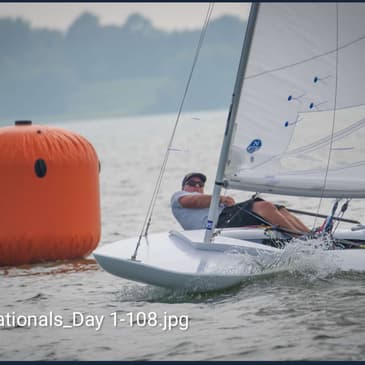
A fascinating discussion with renowned racing sailor Allan Terhune. We discussed with Allan in-depth the art and craft of decision-making at gates, his philosophy around focus and simplicity, and recovering from (and avoiding!) bad starts. Allan’s a world champion in J/22s, has eleven North American wins in the Lightning, Pan-Am Games gold medalist and a multi -year finalist for Rolex Yachtsman of the Year…so he knows a thing or two about racing! A great discussion with so many insights and ideas about how to get around the race course in the front of the pack…!
[00:00:09] Hello everybody, I'm really thrilled to have World Champion Allan Terhune join us as we kick off what is our second season of Sailfaster.
[00:00:17] As many of you know, Allan is a highly experienced sailmaker and racer, he's a multi-year finalist for Rolex Jotsman of the Year, I think including last year as well, right? Last year as well, yep.
[00:00:30] And I think Allan you have 11 North American Championship wins in lightnings and flying Scots and Thistles and you're the J22 World Champion. Oh, you were in... Where I was in whatever it was, 2013 or something like that? Yeah, yeah, super impressive.
[00:00:47] And I did see that last year was a massive year for you, right? The Scow class champion, the 6 meter world champion is tactician and a gold medal in the lightning class at the Pan American Games in Chile, I think that was...
[00:01:01] Yep, it was a really good year. Can't complain about that for sure. I was going to say that, that sounded like an incredibly disappointing year for you. Yeah, it was really bad. And that was fun, really fun.
[00:01:14] What were the goals? If I can ask what were the goals that you set yourself for last year then? Interesting. I mean, honestly it was more of just trying to do projects that were fun.
[00:01:26] You know, I had not sailed six meters before and doing the Pan Am Games was something I'd always wanted to do.
[00:01:32] It was kind of to do fun projects, you know, do things that were sparked interest and got motivated to do and just were something I was looking forward to do.
[00:01:41] So I think that was kind of the biggest priority for the year was just finding fun, exciting projects to do. Yeah, it sounds like you had a dreadful time doing that. It was terrible, yeah, let me tell you. It was super fun.
[00:01:59] So we're going to the next 45 minutes, we're going to talk about your philosophy around focus and simplicity. You and I talked a few days ago in prep for this about the 95% rule I thought was interesting.
[00:02:15] And then I'd love to spend quite a lot of time on how to make good decisions as you approach gatemarks. That was something that sparked something in you. I know there's so many things we could talk about. I know you've done this a lot, you've interviewed a lot.
[00:02:30] But I thought those would be super interesting for our sail-faster listeners. Perfect. But before we get going, can you tell us about how did it all begin for you? Yeah, I mean my whole family has been sailing since I've been growing up.
[00:02:45] And obviously I grew up in New Jersey. I'm not a native out of Palatine. So sailing is just part of the culture there. My dad was really big into it and sailed with him on his J29 and other boats. We didn't have opties when I grew up.
[00:03:00] So we had a little local cram that we all used to sail. And then there wasn't four twenties yet at that stage either. So we raced blue jays and other boats.
[00:03:10] There was definitely a bigger priority of sailing with adults and sailing on bigger boats when you had the chance when I was younger.
[00:03:19] So it did a lot of crewing on different boats and sailing with older folks at the club is kind of the best way to gain experience.
[00:03:26] It was a lot of sailing, but maybe kind of different than the way it is now where junior sailing there was a little more structured on doing some of your own sailing but sailing with other people.
[00:03:35] So it was pretty good. Definitely a different, definitely a little bit different than it is say now or in other places. At what point did you realize there was a sort of professional career in it for you? Never.
[00:03:49] I mean I don't necessarily think of it as work even still, but I don't know.
[00:03:54] Basically it came kind of later. I went to college at the Merchant Marine Academy in New York and spent a few years doing other maritime related work, worked at the Port of Philadelphia for a while.
[00:04:07] Then after that got a job actually coaching at the Naval Academy for a little bit and then got pulled into working in North Sails probably in 2000. So I think it's kind of gone from 6 or 7, something like that. And then it's kind of gone from there.
[00:04:23] So it's kind of been a whirlwind of getting here, but it's been good. Yeah, I was going to ask you about the North Sails thing. I saw that you spend time at North Sails and you spend time at Quantum Sails.
[00:04:34] And then back to North Sails. What are the differences in design philosophy or operational philosophy did you find between the two sailmakers? It's definitely different. I mean, I think both companies are obviously successful and have good dealing with customers and things like that.
[00:04:55] But I think there's some definite cultural differences in how the companies work inside and kind of how everyone kind of does things and kind of procedural things.
[00:05:06] I think I'm a little biased having been back here and been here for a while. I mean, I think the 3Di product is definitely something that's quite special and sets North apart.
[00:05:15] And the design team is really conscious about making sure that we have the best sales all the time. And that's something that I really get excited about.
[00:05:26] It's good. Both places were, obviously I've been here a long time and my time there was great as well. I wouldn't really trade it for anything. I think it was definitely a good experience and worth doing. So it was good all right.
[00:05:39] Tell us about what was the last Regatta you raced in? The most recent race? Well, other than Thursday night sailing. We did the Helly Hansen. I crewed for my wife at the Helly Hansen Regatta here in Annapolis on the J70. Oh yeah. What were you on?
[00:05:57] Sailed on her J70 and we were fortunate enough to win the event. It was kind of a new team coming together and she's done a lot of J70 racing in the last couple years and has a very successful program.
[00:06:11] So it was fun to be invited to hop on her boat with her and do it. And yeah, it was really good. Sailed with Dave Hughes who I sailed with a lot and six meters in the J24 and some other stuff.
[00:06:25] And Colin Kirby sailed us who's local pro in town here is really talented. I'm sure you've met him going through some things here in Annapolis, but it was good. It was a really fun team.
[00:06:35] And the event was fun. It was cold. I'm sure you remember being out there. It was not the night. Friday was great, but Saturday and Sunday weren't the nicest days, but there was wind. So we'll take it for around here for sure.
[00:06:46] I think we did two out of three. I think the third day we didn't go because it's pretty miserable. But it was a great event though. It was. Yeah. They did a good job organizing it. The parties were good. It was cold, but sailing was good.
[00:07:00] So yeah, I think it's like the best weekend of the year. It's like the beginning of summer here in Annapolis when that we're going to happen. So yeah. Yeah.
[00:07:09] Hey, when we when we chatted a couple of weeks ago now, you had these interesting thoughts about simplicity about, you know, focusing on simplicity as a philosophy of yours.
[00:07:21] So can you talk about, you know, what does that mean to you? What does it mean you do differently if anything? And I suppose it probably means focusing on the things that really matter. And so what's that all about for you?
[00:07:34] Yeah, I mean, I think it's it's it's, you know, the sports super complex, right? I mean, there's so many moving parts and pieces.
[00:07:39] And I think it just eliminating as many variables as you can and kind of making it so that you're focused on the big things that matter, you know, and it's like, you know, you and I chat a little bit about this, you know, it cracks me up when people are talking about a half a turn of tuning here or there.
[00:07:55] And it's like, well, if you're not even trimming the main sheet in the gypsy, right? Who cares if your lowers are half a turn too tight or, you know, just just little things and, you know, being prepared and, you know, stuff like that that kind of gets in the way of,
[00:08:09] of, you know, aligning everyone to the, the too many small details kind of make background noise, which I think is a problem.
[00:08:16] You know, I think it's just focusing on, you know, one thing at a time getting a good start or, you know, one of the things we usually talk about on the boat, you know, is just, you know, we're focused on the
[00:08:25] what's next at hand, what's next at the start. And it's like, we're worried about that first. And then once we get going, then we'll worry about the beat and then we'll worry about the next thing, the next thing.
[00:08:32] It's pretty easy to get overwhelmed when you start thinking about the entire race at the beginning. It's pretty easy to kind of lose sight of what's really going on, which is the immediate what needs to be done.
[00:08:42] So just, yeah, you can get really lost in the details, can't you? And, you know, you talk to lots of sailors and racing sailors and they'll have a particular ingredient or detail about
[00:08:54] you know, how how tackling should always be three inches above the the spread or six inches above the spray. And I did find myself thinking about, should I get one of those low friction rings for whether tackling, you know, it goes to the front of the
[00:09:09] the sprit? And or should I just keep the, you know, the block that I've got now and I was thinking, this is insane. It's not going to make any difference at all. If I get to your point about if I don't have that's the shoot trend correctly.
[00:09:24] It doesn't matter what.
[00:09:27] Do all these little details add up they do and I'm not trying to diminish that yes you should do everything you can to optimize your boat and do all these things but again I think it's pretty easy to get, you know, you get wrapped up in a little detail that just doesn't really
[00:09:41] matter in the grand scheme of things if you're not doing the other stuff right. I think that's kind of the big thing is, you know, something we talked about a little bit it's like, you know, you got to focus on making sure that everything is, you know, the bigger items are right first before you worry about the other stuff.
[00:09:58] You know, it's like, I get this question, you know, we're not doing well our tunings off and then you watch the races and this, you know, the starts are just atrocious. It's like, well, you can have all the tuning you want it's not going to help you if you can't do this or you can't get the kite up and down.
[00:10:11] It really doesn't matter so yeah, it's kind of developing these, you know, skills and, you know, the big picture, you know, the guess the bigger, you know items have to be right before you can worry about the little details and I think that's where, you know, a lot of sailors get caught.
[00:10:27] They're just worried about the little details and the, you know, the foundation isn't there, so to speak. Do you find when you're sailing with clients that you have sort of pushed them towards that? Don't worry about that focus on the big things?
[00:10:39] Yeah, I mean, yeah, I think all these programs and if you talk to any of them, but you've got to build from the bottom up right it's it's you have to you know, you don't build a house starting with the roof you built with the foundation first and it's like you have to be able to
[00:10:51] back and jive and get the sails up and down and do the basic things before you can worry about all the other stuff and I think that's where people get ahead of themselves is they're so worried about tuning or, you know, I have to wet sand my bottom from 800 to 1000 but it's like, again, if you're if you're not doing the other stuff right it's
[00:11:10] it's not going to solve your problems, so to speak. Yeah. I understand that I mean, we made a marked improvement this year by buying velocity peeing the starts doing practice starts.
[00:11:23] And so now we start quite quite well, you know, quite we never win the starting when they're that but we were not back in the second row anymore was sort of maybe between the first front second row, but but what so you feel like hey that was a really good start and then then you've got the next
[00:11:40] the next problem is how do you hold the lane.
[00:11:43] And then, okay we'll hold the lane quite well and how do you, you know, make sure about it is about you can't worry about holding your lane if you'd never get off the line right so like I think you're proving the point it's one step at a time is focusing on what you can do to build to those next pieces
[00:11:59] right. It's, it's, I think that's the key to all of it. Yeah.
[00:12:04] You talked about the 95% role and I may sort of jumped on that as something interesting to talk about that notion of look it's it's relatively easy to get 90 to sort of 95% of 100 being the optimal top sailor.
[00:12:19] Yeah, the hard thing is he can out that last 5% right to presumably the last 5% is when the tuning matters whether you have a low friction ring or a block those sorts of things matter.
[00:12:30] Exactly, but it's it's you know as I say it's you know you got to get your, you know, steering the boat right trimming the main and jib, you know, right at the you know the big lines it's like I said before it cracks me up when people are talking about, you know, I get this question
[00:12:43] well where should my Cunningham be at this stage and it's like well if you're traveling your main sheet in your back stay on set right it really doesn't matter how hard you pulled a Cunningham on it.
[00:12:51] Right it's like you got to get to the big big controls and big situations first before you worry about the little details.
[00:12:58] And that's what I'm saying if you can get to the 95%, which is, you know, main sheet jib sheet getting reasonable starts kind of executing your plan kind of well then it's pretty you know you're going to get reasonable results pretty quickly and then it's okay then how do you get from the reasonable results to top level results
[00:13:15] and that's the hard part right it's it's the last little bit is usually the hardest, but I think the thing is people tend to focus on the last little bit before they get the base, you know, station to kind of build off of.
[00:13:29] Typically Alan when you jump on a client's boat. What are the things that you immediately can see that they could improve on which would you know dramatically well somewhat dramatically shift their performance.
[00:13:41] Is it or the same things. No, no, no and I think the one thing that's really crucial is when you hop on a boat for the first time is kind of being observant and watching what's going on I think the worst thing it happens you go about and you just say well here's what you got to do.
[00:13:53] It's like you really got to let people sail a little bit see how it all goes watch what they're doing and then kind of build off of what you can see they're already doing to kind of grow.
[00:14:03] I think it's really, it's kind of interesting to see you see the people who help that just jump on the boat before they even leave the dock they're already saying we need to change this do this do this do this.
[00:14:13] And so like I think that's a pretty big mistake you got to put the time and get on the boat. Watch the team sail kind of see where it's going kind of, you know, build a, I don't know if you call it like build a vision of what's happening and then kind of help make a direction from there right
[00:14:32] what's the saying it's hard to know where you're going if you don't know where you're starting from you know it's kind of that thing it's like it's it I don't say it makes me laugh but it kind of chuckle every time you get on a boat and you see a new person hop on they're like oh you're doing this wrong.
[00:14:43] It's like well how do you know you haven't been here, you know maybe we do this for a reason type thing so you know I think it's the approach of you know if you really want to help teams get better you got to get on the boat you got to watch them see what they do, and then kind of build from there and you may find out you know it's crazy you know even people like me.
[00:15:01] You know even people like me learn stuff when you go sailing with people I mean it's amazing how many times you hop on you know it goes sailing J105 on Wednesday night or something you learn something new from other people all the time and that's kind of the building block so you know back to your questions how do you help people
[00:15:16] I think the first thing is you have to learn where they are and kind of see what's going on and kind of help see what the issues are before you can help kind of develop a plan to go forward I think the biggest kind of compromises folks hop on the boat with a pre predetermined plan of how to make this boat better and it's not necessarily right if that makes any sense.
[00:15:36] One thing I think I've seen from your experience and from being interviewed before is that you your preference right now is for the smaller dinghy style boats a more simplicity boat is that true or not?
[00:15:51] I mean not necessarily I mean I'm going leaving tomorrow to go to New York Yacht Club for the annual regatta and sailing on a boat that we're getting ready to do the ORC worlds and you know I do the Mac race Chicago Mac race you know with my in-laws on their family boat you know this will be the second or third time I've done it with them so you know I try and do a bunch of stuff it was just last year was more smaller boats just kind of varies.
[00:16:18] It was what was coming. Yeah just kind of what was coming but you know we're doing a big you know it's whatever it is 40 foot boat this weekend coming up so you know. What events do you really look forward to?
[00:16:29] This year I think we're doing the ORC kind of circuit and new port on this 1198 which is fun and going to do some J70 sailing with Kate again.
[00:16:40] The MC Scow regattas are coming up and I like that because it's you know single handed and all my buddies from junior sailing days all have them and we all go to the regattas and drink beers and have a good time so that's fun too so.
[00:16:53] There's not too much of it I don't look forward to like racing Wednesday nights here too so yeah I mean there's it's going to be a pretty good season coming up I think so. The 1198 that's an Italian boat right? Yep exactly yep.
[00:17:08] Yeah the new wave of Italian boats. Exactly. How do you think about your personal preparation for a regatta or a single race whether it's coastal offshore long distance do you have a checklist that you go through in your mind?
[00:17:27] Yeah I mean I do I mean I think for me it's always having you know the boat should be you know prepared and ready to go and you know I definitely like to just to know be comfortable with the boats ready and you know have good weather intel and things like that.
[00:17:45] I think the one thing for me is I'm not a big believer in this.
[00:17:50] I don't like what like the term I say is festering like I hate just standing around and wasting time so like I'm a full believer it's kind of an interesting topic because it's like you know I've heard this discussion before like I'm never a believer that if you're prepared and you have your schedule like you set your schedule to get to the race course when you need to get there and you get to the boat and you do what you got to do and you go right I'm not a big believer in you know if the race starts at 11 getting done.
[00:18:16] It's 730 in the morning and standing around and twiddling my thumbs for three hours just so we can say we're the first ones at the dock and doing all that stuff that's just not in my vocabulary.
[00:18:24] So you know I would if I'm ready to go it's I get up I grab my stuff we know what time we're going to be there we get to the boat we do our stuff and we go like it's not a stand around stuff and the same thing is when you're done at the end of the day it's like you have your debrief and you move on and there has to be on and off switches for it that's when you know you're prepared.
[00:18:45] It's when it's a lingering you know you would if you're doing boat work or it's just all these days start turning along and running together that's when you know you're actually a little bit unprepared right it's kind of interesting to me like the top teams are the ones that it day is over they fold the sales up they do a little bit of their boat work and they're gone right and then in the morning they show up they get dressed they get on the boat they go.
[00:19:05] Those are the ones that kind of show to me that they're like prepared and not the ones that are you know at the dock doing boat work or redoing stuff over and over again I kind of view that as you're actually slightly unprepared if that makes any sense.
[00:19:18] So, I think a lot of it is just getting stuff done ahead of time and making sure the boat is right. I think that's the big thing and I think for me my biggest pet peeve is just stuff on the boat not working.
[00:19:32] You know, I just want to be able to if there's a control on the boat should be able to be adjusted or work and you shouldn't have to worry about stuff breaking.
[00:19:39] I think that's when sailing actually becomes unfun right I mean how many times you've been on the boat something breaks it gets pretty frustrating right and it's like you can deal with not sailing well and losing a race it's just a bummer when you lose a race because the boat broke.
[00:19:51] You know it's just kind of a bummer so that's a big pet peeve for me but it is what it is I guess.
[00:19:59] Do you ever some sailors do that visualization technique in terms of the day before the two days before or even the night before so I just think through that. You're obviously familiar with that do you practice that?
[00:20:11] Yeah, not really I mean I think for me it's more of just you know I'm a big kind of if I can not think about it I'm probably better off so you know I kind of will check the weather do things but you know like the night before you know you read your sailing instructions and check the weather.
[00:20:29] And then I if everything on the boat is right I try and just turn it off and not think about it I mean it's kind of a it's I think it's easy to get worked up and kind of over think stuff if that makes any sense you know.
[00:20:41] Yeah yeah no it does it's interesting. You just got to kind of just just do what you know how to do and not stress about it a little bit. Nice it's obviously second nature to you right so it's.
[00:20:51] No I don't know if it's that it's just I think it's one of these things that you can become you know what is it like paralysis by analysis like you can overthink this stuff to death and I think that kind of goes back to your original point of just keeping it simple right I mean if you if you
[00:21:06] don't. You know it's it's it's just too hard to kind of I mean you can sit there and literally over analyze any part of a race over and over and over again it'll drive yourself nuts.
[00:21:17] And there's just stuff you can't deal with it I mean there's just things you can't do.
[00:21:22] I mean just it is what it is so yeah maybe it's older age for me because I used to think about it more but I think it becomes easy to just blow your head up if you just keep thinking about it over and over and over and over again.
[00:21:35] So. Yeah, I mean I'm actually on the other end I'm thinking about afterwards like why the hell did we go that way.
[00:21:44] Well I do think afterwards it is important to kind of and this is you know is not only relive it but kind of go through these situations where if you know there was an issue to think it through and and kind of play it back in your head.
[00:21:58] I think that is actually really good because I know for me that's how I don't make those mistakes again right I mean it's it's it's kind of learning from the stuff you did and making sure that it doesn't.
[00:22:08] You know you don't do it over and over and over again is kind of the big one so I actually think the replay after doing that is kind of more I'll say beneficial if you're doing it the right way then kind of forward thinking about what's going to be and you just don't know.
[00:22:23] I mean you know you never know what the next day is going to bring on the water we can look at forecast all stuff and I mean how many times have we seen a forecast you get there it's not even close to what it was.
[00:22:32] So yeah I probably more of a replay kind of figure out what it is learn I need to learn and then shut the sailing shut the sailing computer off for a while and do something else. So yeah, you know again.
[00:22:46] Hey, can we just go back to the 95% idea because I love this and I know it was conceptual of some of you throughout that.
[00:22:53] So you get to 95% say we're at 95% right which presumably means hey we start well we hold lanes we make good decisions we you know tack on the shifts and good mark roundings but once you're there to get to the sort of 96 97 98 which gets increasingly hard.
[00:23:10] But that typically things you see the top teams doing that you that separate them from the rest.
[00:23:16] So it's interesting when I was sailing stars is kind of where this came from is when I started saying the boat everyone's like you know just get the tuning guide, follow the tuning guide, get the basic set of sales and you're going to get to this 95% level pretty quickly.
[00:23:29] And I was like yeah you know did that and it's like and the word of ice was as soon as you start thinking you can go faster.
[00:23:36] You actually run the risk of going slower for a little bit until you figure it out and it was kind of interesting.
[00:23:40] So we did this and we were doing okay and then we started messing with tuning and really getting down oh we think we can make both even faster if we do this and we did it got the boat got harder and we kept making mistakes and learning things.
[00:23:52] And it was like it was like you went up and then kind of went down and then went back up.
[00:23:55] And I think that's kind of the one thing is you know, things like tuning guys right it gets the boat close enough they call it a guide for reasons not Mandel be all but it's the goal is to get you so you're at this competitive level to make adjustments right and it's like it's funny you see boats are not even close to the guide and then they're like well we're slow it's like well if you get to this you can get close enough right and it's like it gets to to the, you know okay now you're at the tuning guide
[00:24:21] but the main doesn't look right it's like well okay well need to turn the main sheet on and ease the travel.
[00:24:26] You know I think it's interesting when you when you get most of these boats you know like you hop on a client's boat you get the boat kind of close to the tuning guide you trim the sheets.
[00:24:35] I'm talking about all the details right and you get a reasonable start all sudden they're like oh we're competitive with the boats that they think are faster and it's like yeah they're not doing anything crazy they're just getting their mast reasonably set up they're trimming their sales reasonably correct and they're getting reasonable starts
[00:24:50] and they're not doing anything that's like earth shattering it right it's it's and for 95% of the time it's like we're saying it's good enough you're going to go win races it's like yeah do you need to do the two boat testing and get them lined up and worry about the half a turn on the lowers
[00:25:05] yeah sure if you're trying to win a world's and there's a four mile windward leg or something like that and you got to get the boat to be a tenth of a not faster yeah okay yeah it's going to get you there but for the majority of stuff that the majority of people do it's just I think we make it too complicated would be my two cents.
[00:25:23] Yeah interesting. Okay Alan what I do want to spend some time is on making good decisions at gates and you know you had some great thoughts on this I was sort of
[00:25:33] yeah I've tracked through those the first one was about a scenario is you know you've got time and room and you're at the front of the fleet you can start you can make decisions about which gate to go to let's talk about that and then let's talk about that situation when you're OCS you're working way to the fleet the gate is crowded which is where I am what is that
[00:25:53] yeah and then you've got a different set of decisions to make that so could you sort of compare and contrast those two situations please yeah I mean I mean the gate is crucial part of the race I mean it only usually you know a lot of times we sail these four legged races right so you only do it once a once a race and you know it's kind of like a second start in a way right because
[00:26:13] you come off the marks you have to hold a lane for a while you got to get through traffic before you get to that so it's kind of like the race is starting a second time right you're at the bottom of the course near the starting line it's it's almost harder because all the boats are in line
[00:26:26] versus you know Bowder Stern versus side by side so you really got to execute the turn and holding a lane I mean I think that's number one part of gate roundings you know regardless of which one's favored and going the right way executing of the turn and getting the boat
[00:26:43] around the mark and going close hauled and going speed and having your lane open is just the number one thing and I think a lot of times that gets lost in in translation where everyone's always thinking about which mark to go to which one here
[00:26:58] nine times out of ten if you can just execute the actual maneuver you gain right I mean it's a huge opportunity there and you know knowing when to go high a little bit if you have enough speed to build up a hole so you can go straight or whatever it is I mean I think that's a pretty important part of gate roundings right it's it's
[00:27:17] especially in one design racing where the boats are generally closer like in the J105 when you're out there I mean you get between five and the back of the fleet the gate is crowded all the time so if you watch the boats that execute getting off the mark and be able to go straight they make huge gains regardless of the mark so I think that's you know kind of number one and I think you know the second one is you know
[00:27:40] well before you go the second one could I just ask you about when do you start thinking about gates are you as soon as you've gone round the top mark or is it half way down
[00:27:51] yeah I mean a little bit because there's some planning to go into it right I mean if you think about it there's you know one of the marks are generally favored up wind and down right so it's kind of funny you know you talk about you know like a starting line if the let's say one end of the line is favored but it's a boat length up let's just say
[00:28:09] let's just say the pin is the pin end is a boat length to windward right let's just as an example the problem is with a gate mark if one mark is out of favor you have to sail that distance to get to the unfavorable mark and then back just to get even to the other one so it's almost like a double loss right
[00:28:27] so like if a gate mark is skewed by let's just say 50 feet you have to actually do an extra hundred feet to get to the other one because you're going 50 feet past square and then 50 feet back to get back to it something
[00:28:39] are you judging that by it's an eyeball judge yeah most of the time I mean if the if the gates are in the water you can pre start you can get a bearing of the gates and kind of have a rough idea of which one's there but you know just remembering I mean if they're if they're very
[00:28:55] unsquare you know you lose a lot of distance going to the unswear mark so that's that is one of the things it's like that it's a trade off how much distance are you willing to lose to go to one that might have less traffic right I mean it's a lot of
[00:29:09] I think the one thing a lot of people forget and you know I think about quite a bit is you know there is two sets of lay lines for these marks right so there is a part where you can get down the course and kind of get to a point of no return where if you get too far one side of the other and you're outside the lay lines
[00:29:29] you've basically made it a one mark rounding right because you've you've now you've gone outside kind of the cone that puts you you know where the marks are you know so that basically the other ones not in play anymore so I think that's a big I don't say it's a mistake but it's a big thing people forget about
[00:29:44] it's all of a sudden you go off you know you come around the world market put the kite up your own starboard also going going going and if you go past the lay line for the left turn you pretty much lock yourself into a right turn regardless of what you've done right which may be correct but you may not be correct
[00:29:59] and all of a sudden there's a little shift and you realize oh man I want to turn left it's too late now you're bow up and you're sailing all that extra distance now to get because you've over stood no different than over standing a one word mark it's kind of the same thing so I think that's the one of the other things that happens a lot is you know we don't pay attention to lay lines enough and
[00:30:17] over standing gates okay so we're halfway down yeah the downwind like that yeah what are the sort of things that as you're looking at the gates coming towards you yeah what are the sort of things that go in your mind when you start deciding about which
[00:30:32] way to go so it's which way I want to go upwind but I think you're right halfway down you got to start making the decision because you have to kind of prepare for the lead up of how you're going to get to the mark right so it's it's you know halfway down you're probably starting to look and say okay
[00:30:45] up the beat I want to go one way or the other where do I think there's more congestion because there's boats on either side kind of how do I avoid that and then you're developing the plan yeah halfway out because otherwise it's too late if you're doing it a third of the way out generally I mean you're probably I'm not saying you've already picked it
[00:31:03] up and you know you're not locked in at halfway down obviously but I think you're starting to develop a plan of what you want to do I mean there's a couple things like by default if I if I'm all is even in the world and I have no one way or the other that I'm like locked into
[00:31:20] I don't know what you're trying to left turn if I can with the primary reason that if I have to tack at least I'm tacking on to starboard and I'll have right away whereas if you round the right market you go off on starboard and I don't know another boat is going upwind and you need to
[00:31:35] get to the right place and you're on port you've got issues so if I have my way I generally will turn left if I can but you know obviously it doesn't work that way but I think the the most important thing is is like we started with earlier though which mark let you execute the
[00:31:51] turn and get out of there as quickly as possible because I think there's a lot of you know when you get caught in the pile up or the melee at those those marks and someone goes to the even the unfavorable mark but they round clean and go they generally gain even if there's an unfavorable
[00:32:04] you know side to the the course and the mark so yeah I mean there's so many factors current wind strength boats traffic me it's pretty complex but I think you have to start as you said thinking about it at least halfway down which is
[00:32:19] yeah we've been in situations probably like so many people where you're say you're heading to the left hand gate and then you use the tactician makes the call we're going to go right we're going to go right and that throws everything off and you then
[00:32:31] it does yeah but you know you as a I tend to be the driver so I'm starting to think about hey you know where can I thread my way through what's the opportunity do you in those do you get yourself in those situations or is that really rare for you
[00:32:46] you do but I think what happens is if you if you if you're you know the tacticians you know organized or they communicate well about it I mean you're going to know you're in trouble I'm saying trouble but maybe you know having some thoughts about it
[00:33:02] you communicate that the team you might say hey you know I'm thinking left right now but the right could be in place or just be prepared for either way something like that you know we're going to be deciding last minute what we're going to do
[00:33:13] or you know some kind of whatever the code word might be about coming in there you know letting the team know alright the plan right now is left but if something goes funny here we're going to make a right turn then everyone knows okay well at least it's on the table and if it's not you
[00:33:28] could say we're doing a left turn no matter what it's definite final we're doing it and that kind of helps the whole team and I think that's where clear communication of what the expectations are going in kind of helps the whole procedure right
[00:33:40] yeah someone on the boat has to say yeah we're doing this and this is the plan or this is the plan as of now but it could change just be ready in case and I mean while that may leave people uneasy they're more comfortable at least knowing okay this could
[00:33:55] change so they can at least start thinking about it a little bit and say if this changes what do I do blah blah blah so you know I think a lot of that is communication just saying you know yeah the plan is to go left but if something goes wrong you know just be prepared if
[00:34:09] something goes wrong we're going to audible something like that and then at least everyone knows whereas it could just be like we're making a left turn we're just doing it that's what we're doing and then everyone knows okay this is the plan we're sticking to it so
[00:34:21] yeah no that's good because there's probably situations where you do say no we're going to go left we've got plenty of room here nobody's around us we're going to go left versus the case when people are converging like the plan is to go left but be ready because we might have to switch to the last minute we're going to know that in five
[00:34:38] like sort of thing and say the calls coming shortly but just be prepared we might go right and that's and did but it's make me more concise than that but it shouldn't be that hard to just kind of do it.
[00:34:49] Yeah, I think I really find this super interesting that you know you talked about this being it's like a start basically you can make or break your race by a good gate decision and good rounding and then the notion of having a bias towards the left so that when you
[00:35:04] tack out you're coming on on starboard and right I mean if things go badly let's just say you end up a lane down but you have to tax and now at least if you're tacking and you need to get out of there and let's just say a boat had a better rounding behind you
[00:35:16] at least you're on starboard right so now they might have to duck attack you have if you're going off on starboard give a bad round and you got to tack the port now so you're duck in the train of boats it could just gets worse.
[00:35:26] Yeah, you know for me if I have my way I try to turn left. I'm not saying I do it all the time but I would say I probably don't but I'm saying if I had my way I would always say if I'm not sure what to do, I'm going to make a left turn just to keep it that way.
[00:35:42] Because I suppose if you know for me if I'm focusing on what's going on around boats converging it's chaotic then if you take the right hand mark and you then when you start looking up wind again then you suddenly see all these boats coming down like shit we're stuck here on starboard there
[00:36:00] versus the other way it doesn't really matter about what traffic is coming down because if you're tacking on to starboard you have rights anyway so you've got less to sort of worry about which I like that's a philosophy.
[00:36:12] Hey one more thing that you know you and I briefly touched on I've had a couple of questions people send me question to email me with question they'd like me to ask and I've had a couple now about how do you recover from an OCS.
[00:36:26] How do you work your way back through the you know bottom the fleet and the mid you know mid fleet and you and I talked about this very briefly the other day so take into that scenario right your OCS you're turning around coming back.
[00:36:40] Yeah actually interesting had this scenario to MC we got a couple weeks ago and it's it's a. You know I think the one thing that happens is is panic levels go up right and you know I think it's it's a.
[00:36:56] A discipline of being able to stick to what you think your plan was and then just kind of working your way through it bits at a time and I think the one thing to remember you know just philosophically right away is you know your first goal is always to close distance right it's like.
[00:37:10] You know everyone's like oh you know the we're over early but by the first mark we didn't pass anybody it's like well who really cares if you passed anybody if you went from being.
[00:37:20] Two hundred yards behind to you were overlap with the last boat at the next mark that's a game right you've caught back up to the pack and it's like how you know each leg you can kind of keep closing the distance to the front is really the goal right and I think.
[00:37:33] You know realizing you're not going to get the whole fleet back at once and just kind of slowly methodically taking your you know sailing the race just like you would if you were in the front hitting your shifts managing your lanes.
[00:37:45] You know doing all these things I think that the trick then is as you get into the you know the bottom and middle of the fleet and even back towards the top of the fleet is.
[00:37:55] You know your traffic management becomes more important you know where you know it's kind of funny everyone's like oh and you're in the front everybody looks so easy it's like well it is a lot easier when there's.
[00:38:05] If you're in the first three boats and you don't have to duck or tack anybody there's no lanes to worry about you have clear all the time.
[00:38:10] You know yeah it is a little bit easier you just kind of go right you watch the attack once a beat twice a beat they just sale where as in the back you may tack six or seven times because you need clear air right so.
[00:38:23] I think it's you know just sticking to the basics of managing your you know lanes and doing things and I think you know not taking the flyer until you realize there's an opportunity to actually make a.
[00:38:34] You know substantial gain and risk the the the risk reward of you know ending the race right there if you if you're over and take a flyer to a corner in the corners wrong the race is over I mean it's.
[00:38:48] You've now gone from being far behind to further behind and that's it so I think the whole goal is just you know again sticking to like you were saying the basics.
[00:38:55] Keep your boat speed up keep your lanes clear just kind of slowly get your way through and then you know find your opportunity to kind of.
[00:39:03] Game way through so I think that's the key it's a mindset of just slowly chipping at it and closing distance versus I got to get it all back right now or the race is over I think it's really hard to do that it's impossible.
[00:39:15] So it's trying to sort of minimize losses at that point then just yeah I mean you're minimizing losses and realizing I mean look.
[00:39:22] It's a pretty rare case that you're over early and you win a race right I mean it doesn't happen your goal then is to turn a tragic score potentially into.
[00:39:31] You know like they say you just need a keeper right and you need a race that's not going to you know blow the whole thing up so it's just a matter of turning that into a score that you walk away from go yeah we say the good race and we got you know yeah we're over but we got.
[00:39:44] You know whatever it is and just kind of making these slow gains through the fleet not not panicking not making rash decisions over this I mean I think that's the.
[00:39:54] Yeah not I hear you saying you don't throw out the game you don't throw out the game plan you just try and execute it in the same way and notwithstanding the traffic yeah and it's interesting you know you talk about game plan you know I talked about that a little bit it's it's kind of funny because I think.
[00:40:11] A lot of people you know you can talk to I hop on boats all time you know with teams that are struggling and they're like we never know which way to go and do all these things and we talk.
[00:40:20] To them most people can figure out kind of the currents going this way I see more wind over here I kind of want to go to this side of course I think all that.
[00:40:29] You know most people and again I think understand how to make the game plan right I think the biggest issue with sailing is the execution of said game plan and how many times like a start goes bad and Elaine falls apart and then all sudden you know.
[00:40:45] I've seen this a million times all the whole goal is to start we're going to work the left side of course they get a bad start they get flushed out attack they duck a couple boats then they're on port they're like oh we got a clean lane let's just keep going it's like well.
[00:40:56] Why are we to keep going all the way the right side the whole talk pre race was to go to the left let's find a way to get back to our.
[00:41:03] Playing it back to the left right you may go up and tack and now yeah you're further right than maybe you want to be but you're still going towards the favorite side of the course right and it's amazing to see how many times people just throw those plans out the window because one little bump in the road through them off the path right so it's kind of a crazy.
[00:41:21] Crazy situation so. But it's understandable isn't it because you know if you do you can't hold the lane your tactician is telling you we got to attack we got to talk and I hate that because then you're going to but then.
[00:41:35] To come if you come back again then you're visibly behind everybody else if you turn back to the left hand side of course you're visibly behind somewhere else whereas if you sort of keep going towards the right.
[00:41:47] There is that mental picture of OK well maybe we'll get lucky here we're clear and that sort of. It's kind of like I mean I hate saying it's like living in denial right in the it's.
[00:41:58] It's tough I mean sailing is kind of a tough you know this especially one design side of it's a tough thing because there's a lot of it is just realization of.
[00:42:09] You know how to realize your losses and just kind of you know stop the bleeding and kind of keep moving on sometimes right it's like sometimes it's really hard as you and I talked about just putting stuff aside and not getting down or beating yourself up on your past decision
[00:42:24] and just kind of you know figure out how to keep moving forward. It's it's pretty funny and everybody does that differently you know everybody's personalities differently so. But yeah it's a big part of it huge. That's great.
[00:42:39] Let me ask you something so you're a very successful sailor obviously why do you think you are successful. Well I do think that. I mean I think for me I would say. I know I try very hard not to make the same mistakes over and over again.
[00:43:03] I so maybe I beat myself up too bad when I do something wrong but I think that's how I know that's just how I personally learn is is you know if I do something I wasn't happy with replaying it over and over and over again.
[00:43:17] I try very hard to be repetitive on the stuff I do which is you know for me it's like building habits and playbooks and things like that so that you know I like things to be more as you're saying earlier you know you know.
[00:43:32] You know just stuff that I naturally do than having to overly think about.
[00:43:36] I think the one part about sailing for me that for me personally is if I have to overthink it usually it doesn't go very well like it's got to be something for me that success usually when it just kind of feels natural and I think a lot of that is just you know.
[00:43:52] Spending time and doing stuff and I think I think I sail a lot of different boats which I think is very beneficial.
[00:44:02] I think you learn a lot of stuff from sailing different boats you see a lot of different techniques you meet a lot of different people and I think that's one of the things I think it's really easy to get kind of stuck on sailing one boat you kind of get a little bit of a rut type thing and maybe you're plateauing on your your gains of skills.
[00:44:20] I think the more different boats you sail it actually makes you a little bit better so I know it's one thing I try very hard to do a sail on as many different boats as I can because you can learn a ton so.
[00:44:30] I think keeping learning is a big thing as soon as it becomes stale and you're not learning anything I think you don't do better. Yeah there is so much to learn. Well and I think the amazing thing is daunting.
[00:44:43] Yeah it is but I think that's what makes it fun and yeah I think it makes our sport kind of unique is that you can always learn and you can learn from people you don't necessarily think you would learn from if that makes any sense like.
[00:44:59] I guys mentioned before there's so many boats you hop on your sail on a Wednesday night or you sail you know honestly even going with your buddies you just go like throw the boat in the water and go grab beers you're just going to cruise around on a Saturday.
[00:45:10] It's funny like if you're kind of paying attention you'll be like huh look at that never thought of this before never saw this piece of rigging or never thought of doing that that way or what like you can learn stuff from people all the time.
[00:45:22] It's kind of crazy and I think if you watch people who are really good they're pretty inquisitive about stuff and and then they kind of just put it in the bank for something to use later so I think it's it's that's the cool part about the sport I think.
[00:45:34] Yeah I think you're right I've been lucky enough to talk to some very good sailors and they do share that attribute of curiosity inquisitiveness thinking about things trying to problem solve again and again and again and there's an obsession about it which is which I think is really interesting and of course it means a sport is is absolutely fascinating.
[00:45:57] And to your point I've had people who told me I was listening to such and such on your podcast and this person who's talking to me is a very good sailor.
[00:46:06] They say I never realized he or she did that that's really interesting I picked the people pick those things up from other sailors all the all the time which is super interesting. Alan this is this is terrific.
[00:46:21] Thank you so much for taking the time to talk to us. You have a you know obviously you're a top sailor with a lot to share so I'd love to do this again.
[00:46:31] Absolutely next time we're going to be at the yacht club so I can you know get a bunch of beers out of your first. Sounds terrific. Thank you very much. No thank you super fun.