
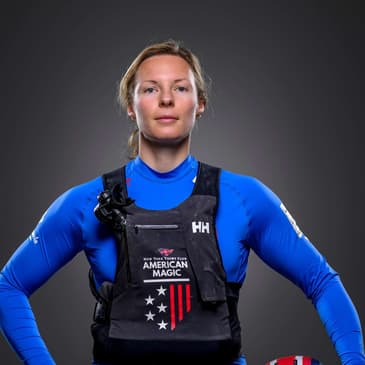
In this episode of Sailfaster, I’m delighted to welcome the brilliant Sara Stone, a professional sailor with an impressive career spanning offshore and inshore racing including TP52 Super Series and the America's Cup! From her early development at Oakcliff Sailing under the mentorship of the legendary Dawn Riley to her bold career transition from international public health, Sara’s journey is both inspiring and remarkable.
We delve into her standout triumph in the 2022 Newport-Bermuda Doublehanded Return Race, her integral role in the Women’s America’s Cup with American Magic, and her thoughtful approach to preparation and teamwork. Sara shares her philosophy of embracing every opportunity with intention and her passion for advancing women in elite sailing—all while thriving in the high-pressure world of competitive racing.
An insightful and inspiring conversation with one of sailing’s most thoughtful and accomplished athletes. Don’t miss it!
[00:00:10] So hello everybody and welcome to Sailfaster. Today we have an episode I think you're really going to enjoy. It's with the amazing and eloquent Sara Stone, who is a very accomplished professional sailor, known for her expertise and commitment to excellence in both offshore and inshore racing. What's really interesting about Sara amongst many things is that she switched from a high-pressure international career in public health to professional sailing. And in doing so, she quickly built a reputation for technical expertise, strategic acumen, and the
[00:00:40] and the ability to thrive in the high-pressure environments of elite racing, whether that's TP52 regattas, long haul, ocean crossings, or most recently the Americas Cup. Her accolades include a standout victory in the 2022 Newport to Bermuda double-handed race, where she and her teammate Cat Hunt not only competed but managed a whole project themselves, securing funding, logistics, and executing their strategy with obvious precision. Sara has also been part of groundbreaking
[00:01:10] initiatives such as the women's initiatives such as the women's American America's Cup team sailing with the American Magic Team in Barcelona this summer. And in doing so, she and that team really contributed greatly to advancing women's participation in elite sailing. So I know you'll enjoy the episode and here we go. So Sarah, welcome to Sailfast. I'm so glad to have you on the programme.
[00:01:40] Thank you. I'm so excited to be here. Great. So let's get into it. So you transitioned from a professional career in public medicine at the Centre of Disease Control into professional sailing. How did that shift come about? And was it something that you'd always dream of doing?
[00:02:01] Yeah, it's definitely a slightly different background than many of the people I'm sailing with at the moment. But I grew up on the water. I grew up sort of cruising around Buzzards Bay in the Northeast and I loved being on boats and on the water. And when I went to college, I actually went for rowing. So again, I was still on the water, but not sailing.
[00:02:20] And after college, I was in my first job based out in Colorado. So I moved from previously being by the water to this landlocked state, no longer was on a college sports team. And all of a sudden, I saw this team being put together to race around the world. It was Team SCA for the 2014-2015 Volvo Ocean Race.
[00:02:44] And that was the first time that I realized that there were women out there and this was their job. They could go race on sailboats. And I didn't even know that was a thing you could do. So for me, that moment and seeing that team come together and sort of sitting at my newly found desk job, I was like, wow, that is cool. That's what I want.
[00:03:09] What the hell am I doing in Colorado sitting behind a desk when I could be doing that? So did you read about the Volvo Ocean Race or did you see it on something? I'm just curious. I remember seeing it. I remember seeing the website is my clearest memory of it at that time, seeing the updates that would get posted as the teams were coming together and where they would name the different members of all the different teams and their backgrounds and their skill sets and where they came from and what experience they had.
[00:03:38] And I sort of used that as fuel and thought, whoa, okay, this is like a roadmap to what you need, how you need to get it, what you need to get here. Like all of that was there for me to take. It was just publicly available info. And I thought, all right, cool. Maybe that could be me. So to a non-medical person like me, the job you had at the CDC, I mean, I know you were overseas and you had lots of international assignments around Ebola and that sort of thing.
[00:04:08] That seems to be a super stressful, high intensity sort of environment. Did that help you sort of adapt to the intensity and pressure of professional sailing? For sure. I mean, I tend to think that every experience that I've had up until this moment is the reason that I'm here in this moment. So it's for me, all of the public health work and emergency response work that I had done, it made me a better communicator.
[00:04:35] It made me a better project manager. It made me a better logistician, made me a better risk manager. And those are all skills that I use all the time when I'm racing. It's how I put together sailing projects now. It's how I figure out what teams need what dates and how am I going to fly from this place to that place? And how am I going to make it work and piece together my schedule? It's how I make sure all my licenses and certifications are up to date and maintain them over time.
[00:05:02] And that all comes from having to do similar, maybe not exactly the same, but similar things in that previous line of work. So you are a project manager par excellence, right? Yeah. I mean, for me, it's a skill set that anybody can develop. And I had the experience developing that project management skill set through international emergency response work. We're dealing with different languages and different people from all around the world, different time zones, different cultures.
[00:05:32] And you bring them all together to achieve the same goal. That to me is exactly what we do when we race sailboats all around the world. What's funny is you started off by saying, that's something anybody could do. I think that's quite unique skills. But your first major sailing project was the Newport Bermuda Double-Handed Return Race, right? Which I think was your, you did it with Cat Hunt from UK.
[00:05:56] And it was your first project that you, not only did you manage, but you sailed it and won as well. Tell us about how that came about. Yeah, that race and project is a pretty special spot in my memory because it was. It was the first thing that I really put together fully. And I'd been sailing for a few years by then. And I loved the idea of the double-handed offshore racing. And I had done a little bit of it.
[00:06:24] And I'd done more on the delivery side in that shorthanded configuration. And I had been looking for sponsors prior to COVID to do a double-handed transatlantic race. And I hadn't been able to get them because COVID really changed the game there, as everybody well knows. But I, so then this project with the Newport Bermuda Race, there were somebody who had a boat. They had funding. They wanted somebody to be able to race the boat back.
[00:06:53] And they were excited for it to be me, which was awesome. So it came together just a couple of weeks before the race down, which I also did. I sailed from Newport to Bermuda as a coach on board a youth team, which was just an amazing experience and so much fun. And then I had a few days in Bermuda to turn around and race back. And so Kat, I had met her once before, maybe twice before.
[00:07:20] But I'd met her a couple of years prior to COVID when the British sailing team started their double-handed offshore pathway when double-handed offshore might have ended up in the Olympics. So I met Kat there. And I just remember thinking, oh, we get on well. She is a good sailor. She's continued to gain experience since I last saw her. Like this could be a really cool person to do this with.
[00:07:46] And I sent her a message and said, hey, we have a couple of weeks until the race. Do you want to take this on with me? And she was all in. So yeah, it sort of came together pretty quickly in the end, but it was really good. And you'd never sail with her before. Was that part of your risk management? You were able to assess people pretty quickly because that's quite a tall order to meet somebody in the UK and then say, oh, yeah.
[00:08:13] Call them up a few weeks later and say, hey, do you fancy doing a really strenuous race together? Yeah. I mean, you get a vibe from people when you meet them, right? And I knew the project she had been doing in the time since I had met her. She had been doing some awesome things and getting really cool experience. And her and another woman set the record for racing around Ireland. And she's done all these amazing projects. And I remember thinking, OK, cool.
[00:08:41] I liked her vibe. I like the way that she approached things. And I'm sure we can sort it out. And we did. What kind of boat did you sail on? We were on a Sunfast 3300. So a small little pocket rocket. It's an awesome boat. And it was built for double-handed. So it was a great boat to do the race on. Yeah, they're hugely popular, aren't they? Especially in Europe around those.
[00:09:08] I mean, the whole double-handed racing scene is becoming bigger and bigger. What's your mind is sort of the growth of double-handed versus fully crewed? Yeah, it's a good question. I think there are a few things that all have sort of come together in the last couple of years. So there are more boats that are smaller, that are built to be sailed shorthanded. And that's definitely a piece of it. And it's, you need access to the platform. So to have that as one piece.
[00:09:36] And then, yeah, for sure, it's easier to manage a team of two than it is to manage a team of 20. All of the logistics are much simpler with two people. But also, it's really cool to race when you get to do everything. You are driving and you're trimming and you're on the bow and you're navigating and you're the medic and you're planning the meals. And you're managing the engine and the systems and fixing things. And everything is on you.
[00:10:03] And it's really difficult to get that experience where truly it's your responsibility. So there's a really cool piece of that. Do you thrive in that sort of multiple responsibility? Yeah, I do. I enjoy that. I like the prioritization and figuring out all these things have to get done and what is sort of urgent and important. And what do I need to deal with right now?
[00:10:29] And sometimes that's like, hey, I need to sleep right now. And sometimes it's, I need to fix this thing. And sometimes it's, I need to change sails. And identifying that is a cool art. What do you think that you encountered differently from others that made that project so successful? I think probably part of it is that we had never sailed together and raced together before. Right.
[00:10:55] That sounds funny to say, but it meant that in those couple of days in Bermuda, when she flew in and I had slept a little bit after the race down, we spent the time. I mean, we were docked. The boat was on the dock all the way in. Like we couldn't go out to go practice. The way that the boats were aligned wasn't a thing. So we, all we had was onshore preparation. So we could make sure that everything we could see on the boat was sorted.
[00:11:23] Like we could open out every sale and check them all and make sure that they all looked good and they were ready to race with. But we could also spend a bunch of time talking and figuring out, okay, hey, this is where I think I'm really strong. And this is where I think I'm really strong. And how do we put that together? What, what sort of a, a watch system do you prefer? What do you think about when we get this weather pattern or that weather pattern?
[00:11:46] We sat and we talked through the nav and the forecasts and how we were going to access that information, whose responsibility was what in which moments. Like we went through all of that on land before we even went out sailing. And so once we went sailing, that's, then that's the fun part, right? You already know how to sail. So just go do it. Did you recognize in cap, oh, she's got a different set of skills as well as being a superb sailor. But she's got a different set of skills that could sort of complement your sort of areas of strength.
[00:12:16] Yeah, I think there were things that she had more experience at than I did. And there were things I had more experience at than she did. And then there were things that both of us were newer to and things that both of us were, had more experience. And so it was this like funny confluence of being really teammates, right? We, she had to buy into the project when she agreed to do it because for the week before we started racing, I was racing an incommunicado. She had to, she was like, yes, I'm in.
[00:12:44] And also, by the way, Kat, you have to do all the provisioning and all of that because I'm going to be on a boat and I can't get freeze dried food and I can't make sure that it gets down to Bermuda. So she, she, I mean, she was game for it. She took it on and she did all of that. And, um, and then when we got on the water, it was, we were a team. We were two people and we took on the responsibility really evenly. It wasn't a hierarchical thing.
[00:13:10] It was, it was very much a team. And that was a pretty cool experience. So Sarah, I know you've been interviewed a number of times and I did read a really interesting quote, say yes to everything, go sailing, but go with intention. Could you expand on how that approach sort of what it means to you and how that's helped you grow as a sailor? Yeah, that's, uh, it's sort of been my approach all the way through.
[00:13:37] And I think when I started pursuing this dream of sailing, um, I came into it where I was comfortable on the water, but I did not have much time racing. Um, and so I needed to take every opportunity that I could find. And I did, I said yes to everything, every kind of boat with anybody. So weeknight racing on Solings in Boston Harbor, all the way through the winter, J24s, J22s.
[00:14:05] I mean, it was anything I could get access to. Um, and I said, yes, and I showed up ready to learn. And I had, I had known in my mind that, that my goal was at that time was to do the Volvo Ocean Race. That was what got me into sailing, um, after I saw team SCA. And, and so I had this list of skills that I had identified from looking at the women on that team and the sailors on the other teams. And I thought, okay, so I need to gain experience being on the bat.
[00:14:34] I need to make sure that I know how to fly spinnaker. I need to understand what I'm looking at when I look up at a mainsail. Um, all of those things, I needed time and opportunity on the water, but not just time. It was time with intention for me. I showed up and I knew in my mind before I stepped on the boat. Okay. Sarah, today you're on the bow and you're, you're mat racing. So you, you're going to be focusing on this.
[00:15:04] And I would come up with a list of a couple of things. Like I was very regimented with my time on the water. Um, and, and I think that showed through and people could see that I, I was serious about being there. I wanted to be there and I wanted to learn and I was open to feedback and, um, I didn't come into it thinking that I knew how to fly a symmetrical or an asymmetrical kite. People would, I'd say, Hey, I've never done this before, or I've done this once last week for the first time.
[00:15:33] Um, and it's amazing when you ask for help and people are so willing to help. Um, it's like a really nice part of humanity. Did you feel you were always sort of catching up with contemporaries or not? I think, yes. Um, I always, I still feel like I'm catching up, but I also recognize that I have different skills.
[00:15:59] So no, I don't have a college sailing background, but I have a different background that brings with it a huge amount of skills and experience that I can apply to what I'm doing right now. Um, so yes, catching up, but not in a way that, I mean, anybody can learn anything if you are there ready to learn. So I just sort of took that on and thought, okay, I can play catch up in this one department because I'm going to bring all these other skills to the table.
[00:16:28] So psychiatrists talk about imposter syndrome. You have no trace of imposter syndrome, do you? Most people do, you know. I absolutely do. 1000%. Do you really? Oh, yeah. Big time. Big time.
[00:16:44] When I hear myself say things and I like see or look back on last year, for example, when I think about 2024 and the different places I was, the boats I was on, the people I was sailing with, I, it seems bizarre to me and, and like very surreal. And I think the same looking forward to the year ahead. And I, it's, I definitely have moments of doubt and moments where I'm like, this is, uh, am I crazy?
[00:17:13] Am I living in some weird version of reality? That's not true. Um, but it's every, most people, maybe not everybody, but a lot of people have imposter syndrome, right? It's a thing that we know about. And so if I know about it, then I can sort of acknowledge it head on and work to not sort of fall prey to it.
[00:17:35] One thing you've talked about taking notes that you talked about having lists, uh, as you learned, you just create lists and lists of things, which I thought, again, I thought was really interesting. Is that something you'd recommend? Yeah, for sure. I would recommend taking notes. I mean, you can take notes on anything and sometimes it's taking notes about the weather in a particular location you're sailing. Like, okay, every time I've sailed in long beach, when the wind has been out of this direction, this is what's happened. Or when I've seen these clouds form, this is what's happened next.
[00:18:05] Um, so you can take notes on the locations you're sailing. I take a lot of notes on the different boats. So every time I sail on any boat, I come home and like jot down a bunch of notes. Um, and it just so that it's amazing what you think you remember. And then a year goes by or two years goes by and you haven't been on, I mean, name any boat.
[00:18:27] You haven't been on that boat in a little while and you sort of forget the finer details and you just read through a list of notes and you're like, oh yeah, that is a thing. Um, and I did the same thing last year, like even in the women's America's cup, I had this, um, a grid of notes in my life jacket pocket that I could pull out and it was broken down into different sea states and wind ranges. And like, and it was just this like quick glance list that I put together for myself that was, um, okay.
[00:18:56] When it's wavy, here's five things that I need to remember. Like just switch yourself into those conditions and those it's amazing. You're like, oh yeah, right. Okay. That got it. And then you're ready to go. And so, and, and it's a really good technique that takes a minute of your time in the moment, like right before the race starts, you can check it. Um, and you're, you're less likely to make those little mistakes because that's fresh in your mind. It's really interesting.
[00:19:26] I had a Guillaume on, uh, on the podcast before this. And, uh, I found myself when I was editing that podcast, just writing, writing a list of what he was saying about, about, you know, tacking a J-105, which I know is, is, uh, way below anything you've done. But, uh, to me that was, yeah. No way, a good tack is a good tack. It is. It was interesting. So I'm glad you mentioned the America's Cup because let's talk about that because you were on one of the American Magic teams. How did you get involved in that?
[00:19:55] Tell us about that. Yeah, it was a pretty amazing thing to think that when I started sailing, um, and like sort of left my job to pursue sailing in 2018, I had never dreamed of the America's Cup. It wasn't even on my radar, but life moves in sort of mysterious ways. And then all of a sudden, a couple of years ago, there was this announcement that there would be with this 2024 America's Cup in Barcelona.
[00:20:22] There was going to be the first ever women's America's Cup, um, and as well as a youth America's Cup. And so for me, as soon as I heard that, I thought, well, that's, that would be cool. That would be a cool thing to be a part of. Um, and at that time when those first sort of press releases came out of this intention to have a women's Cup, they wanted to do it on boats that had never existed on earth before. Um, it was new technology.
[00:20:49] So whether or not those boats would be built was unknown. Uh, would they be able to build enough? Would the boats work? Um, would the event actually happen or would there be issues with funding or sponsorship or location or any number of things that could stop the event from happening? So I- Ton of uncertainty. Ton of uncertainty. Yeah. And we'd seen in the past where Youth America's Cups happened and then the next cycle they didn't happen.
[00:21:15] Um, so there was, it was like this idea, but I had this sense that it would be really cool. And I, I still don't know if it's going to happen. Um, but as time went on, it seemed more and more certain the first boats got built. They got sent out to cup teams and cup teams got to go sailing on them and they worked and it was like, oh boy, okay, this is happening. Um, and, uh, yeah. Had you done any foiling before that? Yes, I had done some foiling before that.
[00:21:45] I had sailed the moth and done a bunch of practicing and sort of playing around on it. But I was also previously a sailor with the U.S. sailing team. I was training on the NACRA 17, which is a foiling catamaran. Um, and went to the 2021 World Championships in Oman with that boat. Um, so I'd done a bit of foiling prior to that. But most of my sailing had been on more traditional keelboats and on bigger teams. Um, but those are all sailing skills that sort of come together on an AC40.
[00:22:15] So the first time on the American Magic AC40, the first time it got onto the foils, what was that like? Yeah, it's a pretty surreal feeling. So the first day that I went sailing was with some of the guys on the cup team. And the way we did it, there were a few, there were three of us going out for our first time. And so it was three guys who had sailed the boat before. And, um, the rest of us got on for like a 20 minute upwind.
[00:22:43] So as you'd swap in one person, so you had one new person amongst the four. Um, and you just did it, we did like a quick, well, 20 minutes. So it was pretty short, um, but enough that you're like ready for more. Um, and it was, it, I mean, it's, it's cool. You don't feel the speed. You, you sort of focus on what you're doing and you put, like, I had access to the simulator before getting onto the boat.
[00:23:10] So I was familiar with the buttons that I had in front of me and the toggle switches and the numbers on the screen. So I knew what to look for and where to find it. And then you do it for real. It's cool. You were main trimmer, I think. Is that right? Yes. I was a trimmer on the port side. So the, so the, cause I heard them talk about the simulator during, during the event. Was the simulator, did it replicate the feel and movement or like a, like an aircraft simulator
[00:23:38] or was it more just the operations? It did not replicate the movement and the feel. Um, but definitely the operations. I mean, your seats were exactly the same as they were in the boat. Your button panels were exactly the same. The screens and the numbers on the screens were exactly the same. There were for sure differences. Like you didn't have a sail in between port and starboard, which you have on the real boat. So you, you could see the people sitting next to you.
[00:24:04] Um, and we ended up putting up dividers to sort of make that closer to reality. Yeah. Yeah. Yeah. But it wasn't the same thing, but it was a really good start. I mean, it would have been way harder to get onto the boat without having spent a lot of time in the simulator first. So when you're racing then, if you have this, you know, this sail between you, so a lot of the time you presumably can't see the other boats. So there's lots of occasions, but you on that side.
[00:24:32] So how, how do you just manage that? Is somebody else just calling, you know, like the, Hey, they're higher, they're higher and faster, they're slower and lower. Yeah. You probably don't use those sorts of terminology, but just how does that work? Yeah. It's a, uh, it's definitely a unique thing. I've never been on a boat where you are like truly blind to half of the course before. Um, but, uh, it's pretty amazing. The, the, the communications playbook that you develop with your team.
[00:25:01] So we spent a lot of time, um, with our team talking through, what are we going to say? What do we mean when we say it? What are like, how do we make it short and concise? Because you're talking over headsets and there's a lot of information. You're sailing really fast. You have closing speeds of 80 knots. And so do you got to make decisions and you need to, you can't be like having a conversation when you actually need to be doing something. Yeah. Um, so figuring out how you build out those decision points and, and make it so that it
[00:25:30] doesn't feel as rushed. Um, we spent a lot of time working through that and we do, we use things like so-and-so is higher and faster. Um, it's a really helpful comparison point. But the key there is, okay, so there, if I'm higher and faster, if I'm going upwind, very good. But if I'm going downwind, not so good. So how do you provide, or like, where are you sailing into with that? Are you sailing into a better bit of pressure?
[00:25:57] Is there, who gets a VMG gain out of this comparison? Um, maybe there are times in a boat, like an AC 40, where you want to sail higher and slower when you're sailing upwind, cause you can create space so that you can make it to a mark and not have to duck somebody or not have a huge traffic pile up. Um, so those decisions sort of all come together in the language that you use, but for sure, it's a game of trust with the people who are on the boat with you.
[00:26:25] Um, and we used to joke sauce on the port side and we were joked that we were on the scary side because when you're sailing across the race course on port, you do not have right of way. So you are ready all the time for your starboard side to be like tacking. We got to take. That's a great learnings there for sort of club racing, right? I mean, uh, I know you've got, uh, much higher speeds and therefore decisions have to be made a lot more quickly.
[00:26:53] Um, but just getting that clarity of communication, agreement over what certain expressions mean. Uh, cause we all find that when somebody does something, somebody yells at you something and you say, Oh, I thought you meant, or I didn't know you wanted me to do it that fast. Yeah. That sort of thing. So, uh, yeah. And it's, it's a game changer. I mean, it doesn't matter what boat you're sailing on, at least for me, like you, whether you're sailing and going 40 knots or you're going six knots, there are moments when it feels like
[00:27:23] everything is happening all at once. And so you still have to build that decision-making out in advance of that and try to create time and mental space so that you can make a good decision in the moment. Um, and I, hopefully you can make it in a way where you already knew the decision was coming. So you just do it. It's not a high, it doesn't need to be such a high stress moment. Stress moment. So, uh, you know, listening to you, you're a, you're obviously a very accomplished, uh, project manager.
[00:27:53] It's probably sort of an innate skill to manage multiple things at once. That's, that's what you need in the race course, right? You, you're comfortable with absorbing a lot of data and working out what needs to be done. Yeah. I mean, and it's a, it's a skill that you have to practice, right? So the more repetitions you get at, whether that's like calling the timing of a puff, well, the better you're going to get at it. Um, and there are so many ways to practice it.
[00:28:22] And I think probably the worst way to practice it is in your head, right? There's some different sort of accountability that happens when you have to say something out loud. Uh, we used to do this drill in match racing when we were trying to practice time on distance to the line where you'd sail away from the line. And then you would say, we are 40 seconds back with attack.
[00:28:46] And part of the practice was the skipper would tack and you counted down 38, 37, and you had to do it out loud all the way through the line. And all of a sudden you're not just one or two seconds off, but you're seven seconds off. Um, and maybe you're early and maybe you're late and then you do the same thing again and you estimate it again and then you do it again. And after a few times, it's amazing how much more accurate your timing gets.
[00:29:12] But it's different somehow when you have to say it out loud and everybody hears you counting down and then you get there and you're like, okay, I was off. So now we reassess. Um, what does counting it out loud do differently? It's gotta be some form of accountability, right? To yourself and to others and, and making sure that your, your internal clock is, calibrated to real time. One of the ways we've really improved as a team is doing the practice starts.
[00:29:41] So for me, if we do three runs at it, where we'll start the clock at say three minutes, if we've got, you know, 20 minutes before the, before our classes off and then just practice that. And the first time, of course, you're really late to the line or really early to the line. Second practice, you get a little bit closer. And then the third or fourth, you, you start to also get, you just get that feel. So for me, I need that feel for, Oh, I need to be about here, roughly here on the race course
[00:30:10] when we make that final, you know, 45 seconds turn, whatever it is. Yeah. And of course, when the real race goes, it all goes to shit anyway. But it's, it's interesting you do that. But hopefully you can recognize that it's going bad earlier. Yeah. I don't know if I do that actually. So let's talk about the regatta itself. The America's Cup must have been, I mean, you know, I can imagine what a fantastic experience. Ultimately, it was probably quite difficult and disappointing that, that you didn't end up,
[00:30:38] the team didn't end up with a podium place, right? Yeah, for sure. We are all competitors and we're there because we want to race and we want to win. And it's, that's what we're trying to achieve. And anything less than that is disappointing. But it's also an amazing thing to be there and be doing it and have a go at it. And we know that only one team can win. But you were there and you were racing and I'm a better sailor now for being a part of
[00:31:07] it and I'm a better teammate for being a part of it. And, and it means that maybe next time, if I have an opportunity to race in a women's America's Cup or hopefully in an America's Cup, I, I'm more ready for that push and that fight. And it's, it's part of the deal. I mean, only one team gets to win and it's an amazing honor when you achieve that. And we can all, like everybody, I think just respects the skill and the experience that
[00:31:36] it takes to get to that point. And for us, for sailing the AC40s, for all of the teams, but for sure, for us, we had this sense that, man, we need more time. We need time to learn this boat. We're still so new to it. We're so new to each other, to sailing with that group of four women that we raced with. We, we, we needed more time and experience to get to that level. Yeah.
[00:32:01] I really hesitated to use the word disappointed in it when I asked that question, because there can be nothing disappointing about being part of such an incredible event and incredible team. What was the difference between the winning team at Lunarossa? Was it simply that they had more time together on the water? No, I think it's never just one thing, right? There's, there's always a bunch of reasons that come together that create success.
[00:32:27] Um, and I think for the Italian team who won, they, they sailed better. They made better decisions. They, the conditions that you race in are different every race and how you manage those conditions changes. And, um, we had, um, we, we for sure had some tricky days where we had huge waves and hardly any wind and every boat was falling off the foils in every maneuver.
[00:32:53] Um, and if you could string together two legs, then you were like a let an entire, like you would finish well in advance of other teams. I mean, it was, it was really tricky conditions and some of, for us, at least some of those conditions we had never seen before. Um, so we were learning in real time. Um, and we got better every day that we sailed, but things break, they don't work as you thought they would.
[00:33:22] And okay. The foil went down. Like when you press board down and the foil arm went down, maybe it went down and you had this different sensation this time. Was that where you were on a wave? Was that a timing thing? Like there's so many nuances to, to improve upon. And I think that that's just part of the deal, the teams that could put it together a little better, whether that was because they had like a good shift right at the moment they
[00:33:51] needed it most, or maybe they had a really good start and that set them up perfectly. But there, we just, we didn't pull it together in time. But you did have a couple of good results, didn't you? So that's, yeah. Yeah, we did for sure. And our first day racing was really difficult. Um, we didn't have great results, but the second day we've figured out a bunch of things and we came back out and we had some really good results. So if we had had a third day, then I think that that pattern would have continued.
[00:34:20] And if there had been more races in our series, maybe we could have pushed it on to and ended up in the final. Yeah. But that's, you got to come out early and you got to be ready to go from that first race and sail fast. You must have been exhausted coming off the water in just in the pressure, the intensity and just the brainpower it takes to absorb and learn and evolve in, you know, in seconds and split seconds, really.
[00:34:50] Yeah. It's definitely a game of focus, um, on those boats. It's, it's, it's a different type of physicality and a different type of exhaustion, um, to doing something like grinding where your heart rates up really high and you're sweating and you're like pushing your muscles so hard. This is a huge focus operation and the brain effort to stay on task and remember what needs to happen and be switched on to everything that's happening all around you all the time. Um, it's, it, it's cool.
[00:35:20] It's you for sure you go home and you feel like, Whoa, I learned a lot today. Um, and I, by the time I got home at the end of the cup, came back to the U S like, you feel like you could sleep for a week. Amazing. Amazing stuff to do. So Sarah, let's switch to offshore racing, which I know you've done a hell of a lot of, and you've described it is, um, as the art of doing nothing perfectly. Yeah.
[00:35:47] And I think about offshore racing, I think about just sort of managing everything all the time for a prolonged period of time. Um, and for me, that is different than inshore racing, like high performance inshore racing. When you have one job and you need to execute perfectly in your one position, your one role. Um, and whereas when you're offshore and you're out there for days at a time, weeks at a time,
[00:36:17] you gotta, sometimes you can't trim to a hundred percent of your potential boat speed because actually you have to go do this other task. Um, it becomes a higher priority in that moment. Sometimes the conditions are boat breaking and you need to slow down. Um, so that you don't break your boat. There are so many different variables and how you manage that over time. To me, it is more of that sort of exercise in, um,
[00:36:46] it's, it's not the same pursuit of absolute perfection in your role that I think of when I'm racing inshore. What's your trick? If you have any to keeping your competitive edge mile after mile, day after day in a long passage, racing passage. Yeah. It's a, it's, it's a hard thing to do. And I think I come back to list making and notes and when you're tired and when you're hungry and
[00:37:14] when you're thirsty, you're more likely to make poor decisions. So how do you operationalize some things, whether it's drinking water or eating food, um, checking the engine, all those things that you have to do. You can, you can make them require less thought. Um, so I used to have like, when we raced back from Bermuda, a cat and I, we had notes and you'll see it on a lot of like the Vendee Globe boats.
[00:37:41] They've got notes around their cockpits where they are like, remember this, this, and this, remember this, this, and this. And those little checklists, they really help you reduce errors. Sometimes when you're so tired and you can't really think straight, some of the notes that you need to take are things like, if I'm not hitting my boat speed targets, then here are five things to check and you can go down the list.
[00:38:05] And so there are then, you know, okay, I checked this part of the main, I checked this part of the jib, I checked this part of the kite, whatever setup you've got going on at that moment. But if you can then check those things and try to bring your boat back to boat speed targets, you have this little like speed loop checklist that you can come back to all the time. And it takes away that like mental energy of thinking about why am I going slower right now?
[00:38:33] It's quite interesting to write things down, isn't it? Because if it takes three seconds for you to recall, what do we do when we seem to be a little bit slower here? What are the things that we do? In those three seconds, you could have done something else or seen something else. And it's the time savings, but it's also the risk of forgetting it altogether. Like it's really easy to forget, to just check one thing.
[00:38:59] When you've been sailing for seven days and you haven't slept in two and you're hungry and you've been cold for a week, like it's so easy to lose that edge. Yeah. All about mentally keeping the edge as well. It's cold. You haven't slept properly. The food is crap or it's wet or something like that. Have there been periods when you've thought, fuck this, I'm going to go back, I'm just go left here to the sports. I mean, obviously there aren't because you've kept going. Yeah.
[00:39:27] What drove you? I guess it's the fact that I chose this. I haven't fallen into this pathway. This is something that I left my previous pathway to pursue this wholeheartedly. And I love it. I mean, I love it.
[00:39:47] It's so amazing to be out there and sailing and whether you're offshore or inshore, you're sailing with these amazing people with all different backgrounds and stories and they're gems of humans and funny and interesting. And you're sailing with people from all over the world and it is cool. And I love that. Like, I don't have to do this. I choose to do this.
[00:40:13] And so if you came and talked to me in a year or 10 years or whatever, and I answered that question differently, I would hear myself and be like, all right, stop doing it. Like, sure, there are moments when you're like, seems stupid, but for the most part, I really love it. It's interesting. I had the same answer from Pip Haar asked the same question. And she said exactly the same thing. She said, I think you chose this.
[00:40:42] So just suck it up and do it. Which I thought was just a great pep talk when you are in the Southern Ocean steering through icebergs. Are there lessons that you take away from offshore racing that can apply really well to coastal inshore boat racing? Yeah, for sure. I think of all sailboat racing, it to me is this exercise in risk management all the time.
[00:41:09] And I actually think that's one of the things from my previous career in emergency response that translates really strongly to racing. Um, it's this sense that you are always making decisions based on an ever-changing risk profile. So sometimes that risk when you're sailing around an inshore buoy course, sometimes it's like how the tactics are going to pan out when you get to the top mark. Is it worth a duck here because it sets you up better there?
[00:41:38] Is it, do you tack and cover your opponent or do you split with them? Those are decisions that you're balancing risk all the time. Um, and sometimes it works and sometimes it doesn't, but how you make that choice of what you do to me, that is like the core of risk management. And then it's different again, offshore because you have the tactical and strategic decisions, but you also have the risk of the boat itself.
[00:42:04] And the fact that this is your lifeline, um, you have to manage the platform and take care of it. And you can't push all the time because that brings with it risks that are game enders. Um, so how you do that is like, that's part of the art of the game. Racing. So there's talk about being conservative for the first few legs or perhaps the first sort of lap.
[00:42:29] And, um, because that's when is the difference between making it, you know, a huge mistake, you get, you get it wrong and it'll ruin the race. But as the game keeps going, you can sort of swing the balance more to taking, taking big risks. Oh, for sure. I mean, there's a classic line where you can't win if you don't finish. Right. So you have to cross the finish line. And in order to cross the finish line, you need your boat and your people to be in one piece. So start there.
[00:43:00] And then as you get, and, and like that's offshore and inshore, right? You, you take more risks at the end of a regatta when it's all like, you can play all your cards at once and you just, all right, let's go for it. It's like your Hail Mary equivalent. Um, but that's just, that's the game. And you choose when you decide to take those risks and when are you willing to risk it?
[00:43:24] So Sarah, I was really excited to hear that you race on the Quantum Racing's TP52 in the Super Series. That's something that I know so many people follow, right? I think it's done so much to bring Grand Prix Racing to, uh, to mere mortals like me. So what was that like? Were you with Terry Hutchinson on the, on Quantum Racing? Yeah. So it's, I've sailed on Quantum Racing for a few years now.
[00:43:50] Um, but the last couple of years, Terry hasn't been there because he's been working with American Magic. So this upcoming 2025 season, Terry will be back. Um, and yeah, I'll actually be changing roles this upcoming season. So previously on the team, I've been mid bow. So I'm up forward helping hook up the sails, sort of in charge of the weight movement in the interior of the boat for different conditions,
[00:44:16] making sure sails go up and come down as they should so that the back of the boat has, can do whatever they want in the decision-making domain. Um, and then this year I'm actually going to be navigating. So I'm leaving behind the, the sail handling world and going to join that decision-making group in the back of the boat. Wow. That's really, really exciting. Is there a navigator and a tactician or are they, are they rolled into the same role?
[00:44:45] So there are two different configurations, depending on whether you have an owner who's driving the boat or a professional sailor who drives the boat. Um, so we will have, when we have Doug DeVos, the owner, they're driving, then we'll have a tactician, a navigator and a strategist. And then when you have. Wow. You have a tactician, a navigator and a strategist. Yeah. So you've got plenty of people there to make your decisions.
[00:45:14] I just can imagine this huge argument between three people about should we tackle or not. So what's the delineation between the three strategy role, the tactical role and the navigation role? How do those different roles work out? So sort of traditionally your strategist is looking at the big picture, where the wind is, what's happening, what side of the course you want. Whereas the tactician is more focused on the boat on boat decision-making.
[00:45:41] Um, and then the navigator is looking at the course geometry and where the marks are, um, that kind of thing. So all of them there, they all overlap, but they all have their own responsibility. When you add in individual skills and experience, you sort of build out each person's role more fully. I have a steep learning curve ahead of me. I've sailed on the boat. I know the fleet. I know sort of the game that's played.
[00:46:09] And now I need to refine my knowledge and match it up with like what Terry wants, what, when, what information he wants, when he wants it, how I deliver it. Uh, making sure that the systems on the boat are working as they need to work, that the numbers from the instruments are accurate and that our trimmers think they're good. If they're not good, then I need to calibrate them.
[00:46:29] Um, there are a lot of pieces to the puzzle, but a lot of it in the 52s, a lot of it's pre-start oriented and making sure you're on top of course changes and, um, different rules that are in the notice of race and the sailing instructions. A whole new set of lists for you. Yeah. Surely. Oh yeah. There's a big, there's a whole new notebook ready to go. How much scenario planning goes into before the race?
[00:46:56] And then also how much analysis goes on post race? Yeah, it's a good question. And it's every team does it a little bit differently and every fleet does it a little bit differently. And a team like quantum racing for the super series, we have audio recorders on sort of key voices within the boat and GoPros for video recording. And then we have drones so you can see the whole fleet from up high. And so then you can take all this video and audio.
[00:47:23] And as soon as the day of sailing finishes, you put it all into some software and you can play back different moments and you can see, like you can watch the start of the race with a bird's eye view. And you can hear exactly what I'm saying at which moments. And then you can really pick it apart and you can be like, okay, Sarah, you, you did a good job saying X, Y, and Z right here. But then you should have said this other thing a little bit earlier or whatever, whatever you can go through it and you can hear tone and you can hear word choice and delivery.
[00:47:52] And you can, you can see like how tactical decisions are being made, where other boats are, how early are you talking about that decision? Have you missed something? Like there's nowhere to hide, which is a really cool way to reflect. Cause it's pretty amazing when you think you said something and then you hear yourself back and you're like, oh, I just, who knows if I even thought it in the moment. Do you do that as a team? Does the team get together? Yeah. Yeah.
[00:48:21] So different, again, different teams do that a little differently too. So, um, they, we tend to have a couple of different group breakouts, right? So at least with quantum, so the after guard can be together and go through some stuff in more detail. And then you can have the speed team go through the things applicable to them in more detail. And some things are more for everybody, but some things are more targeted or more in-depth discussions. So, um, yeah, there are a bunch of ways to do it, but it's using that sort of.
[00:48:50] The GoPro video audio technology that exists now has become pretty standard fare in a lot of these levels of racing. It's a really good way to learn and improve. So Sarah, the question I always ask, um, any guest is if they have a favorite part of the race course, because you get really interesting responses back. Is there a favorite part of the race course where once you get to it, you think, okay, I can, I can sort of relax now. I know how to do this.
[00:49:19] This is my perfect situation, whether it's, you know, coming around a mark and going down wind or, or whatever it is. Is there one for you? I think it's not so black and white for me. If it's a favorite moment, it's more of a favorite feeling. Like there's, there are times where you like bear away around the top mark and you are absolutely ripping and everything happened exactly. It was as it was supposed to, and it was sort of seamless and there wasn't a lot of chat and everybody just did their jobs.
[00:49:47] And the boat is quiet and fast and it's all come together right in that moment. And maybe it lasts for like one second or three seconds or maybe longer than that, but it's, it's that sense that, ah, okay, this is it. Like, that is what I love to feel. And sometimes that happens in a starting line as you accelerate and you go through the line and you're like, nailed it. I was on the line. I was over targets. I'm absolutely ripping.
[00:50:16] I have the lane I want, the position I want, and, and the boat sort of a little quieter. And it's so good when that happens. But it's not a specific part of the race course. It's just a feeling. No, I understand that. I assume that on, you know, a TP52, like the quantum racing TP52, that happens all the time. Isn't most of the way around the race course that sort of quiet and calm? Isn't it true that that's, that feeling lasts most of the way around the race course?
[00:50:44] Um, I don't know that the feeling that I, that I'm really meaning lasts most of the way around the race course. Um, there are moments for sure on every team where blood pressure goes up, but for sure, the thing you're striving for is the same. And if you can make those moments happen more, then you'll be sailing better and you're probably going to get better results. Um, but it's definitely easier said than done.
[00:51:13] I mean, you could tack a hundred times and they wouldn't all be perfect tacks. So yeah, how you kind of push to achieve that. That's the art of the game. So, um, for somebody looking to follow in your footsteps, either as a professional sailor to make that transition or just to become a better, you know, better sailor, better racing sailor. What sort of advice would you give that person? I think for anybody, whether you're already a pro sailor or you've never stepped foot on a boat before,
[00:51:41] then the best thing to do is show up and say, yes, I sailed on so many different boats with so many different people. And I still am at that point where I'm still saying yes, as much as I can to all different jobs. You learn something new every day on every team with different people. Like the more you can say yes, the better sailor you'll be. Um, and you sort of have no way to know what you're going to learn in a given day or what skills you're going to develop or what the future holds.
[00:52:10] So you might as well say yes now. So Sarah, thank you so much for spending time with us. I knew this was going to be a great conversation and it was, I really appreciate you taking the time to be on here. What's your, what's your next project by the way? So the, we're into 2025 and the next year is kicking off. So just over, just over a week, I actually go to France to sail, sail in Northern France, uh, in the winter, which will be not so warm,
[00:52:38] but I'm sailing with an amazing project. It's the Upwind by Mericon set project. It's a, an all-female team on these ocean 50 trimarans. So you race inshore and offshore in shorthanded configurations, sometimes with five of us on board, sometimes three, two, um, and sometimes solo. So it's, it's a really cool fleet. It's really cool racing and we're into our winter training and then straight from France, I'll go down to the British Virgin islands. Um, so real climate change there.
[00:53:08] And, uh, I'll be down there racing with the RC 44s. Um, so that's the first event of the 2025 season. Yeah. 44s. Ah, sounds absolutely amazing. Um, well, good luck this year. And, uh, I do hope to talk to you again, but thank you again for taking time to talk to Sailfaster. Yes. Thank you so much for having me. It was great to chat with you.