
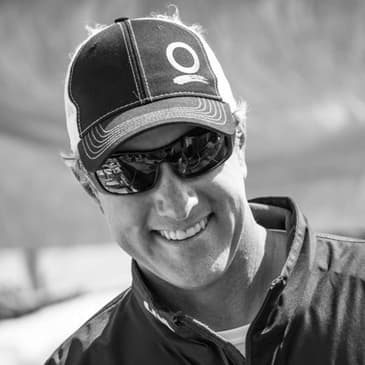
This week I was able to grab time with Quantum’s Scott Nixon in between his many racing and sail design commitments. It was a fascinating discussion that included thoughts on starting, mark rounding and the tactical advantages of wing-on-wing. I knew Scott would be interesting to have on the pod not just because of his stellar racing pedigree, but also because he is directly involved in testing, design, and development of Quantum’s One Design sail programs, where he is Global Offshore One Design Director. Scott has sailed with Quantum customers to win championships at the World, Gold Cup, European, North American, and National levels. He actively campaigned, coaches and races in the following classes: J/22, J/24, J/70, J/80, J88, J/105, J/109, J/111, C&C 30, Farr 30, Farr 40, NYYC 42, Swan 45, Melges 20, Melges 24, Melges 32,Melges 40, and TP/ORC 52 classes. He has also won World Championships in the Melges 32 & J/111 classes. Scott lives in Annapolis with his wife Alexis and daughters Savannah and Summer. I do hope you enjoy the episode!
[00:00:00] Hello, everybody, and welcome to another episode of Sailfaster, the podcast for those who, as
[00:00:17] you know, obsess about sailing faster than anybody else. Well, today I've got a terrific
[00:00:23] guest for you and that's Scott Nixon. So Scott is a top, top racing sailor. Many of
[00:00:29] you will know him or heard of him. He's been involved with yacht racing pretty much his
[00:00:34] whole life, it seems. He was an all American sailor at St. Mary's College of Maryland and
[00:00:39] he has a really fantastically wide range of racing experience including dinghies and one
[00:00:45] design kill boats, inshore big boats and offshore distance racing. And he's raced regularly
[00:00:51] with people like Terry Hutchinson and many of the top sailors, of course. Scott works
[00:00:56] for Quantum Sales and he's worked, I think since about 2000, he works primarily on the
[00:01:02] one design classes. And I thought Scott would be really interesting to have on the pod not
[00:01:06] just because of his stellar racing pedigree but also because of this direct involvement
[00:01:11] in testing, design and development of Quantum's one design sail programs. Scott has sailed
[00:01:18] with Quantum customers to win championships at the World's Gold Cup, European, North
[00:01:24] American and national levels. He actively campaigns and coaches and races in a bewildering
[00:01:32] variety of classes including every J from J 22 to J 111, CNC 30s, FAR 30s, FAR 40s, the
[00:01:42] NYC 42s, one 45 Melgers 20, 24, 32, 40 and of course the TP 52 classes. He's won World
[00:01:54] Championships in the Melgers 32 and J 111 classes. So I thought it'd be great to talk
[00:02:00] to and he turned out to be exactly that. He is living in Annapolis with his wife, Alexis
[00:02:06] and their daughters, Savannah and summer. I'm really thrilled that he had time to
[00:02:11] talk to everything he's got going on. So here we go.
[00:02:14] So Scott, good morning. Welcome to Sail Faster. Thank you so much for spending time with us.
[00:02:27] Good morning. Thank you. Thanks for having me. I appreciate it. I've been watching your
[00:02:30] website grow and some of the podcasts have been great. So I appreciate all your work
[00:02:33] you've done. Thank you. Let's kick off with your current role. You've got this really
[00:02:37] impressive sounding title of being the global offshore one design director. We show like
[00:02:42] a dream job. What's set about? Yeah, it's a lot of fun. I've been with Quantum since
[00:02:47] basically 2000. So it's coming up on almost 25 years now. So obviously when I was younger and
[00:02:53] out of college and sailing smaller boats, I did a lot of that for the group and always worked
[00:02:58] with one design classes and started sailing J 22s and J 24s and Meldes 24s and then it
[00:03:04] dwarfed into Meldes 20s and 32s and grew into bigger boats. So I always helped
[00:03:09] Quantum globally. I work for the corporate office. We have affiliates around the world
[00:03:12] in a good network of loss and I work for the corporate company and I helped develop the
[00:03:17] tuning guides. I'm kind of liaison between the guys on the water and the designers. So
[00:03:23] I know you sail to J-15, so we work with our sail designers and get input from customers
[00:03:28] and myself. Guys that do the sail testing and look at sales in the water and kind of
[00:03:32] update the product every year and update the tuning guides and kind of make sure the
[00:03:36] information going out to the group is appropriate. So I know you, it sounds fascinating. Wish I could
[00:03:42] do that. So there you go with customers a lot and sail testing. Other times when you sort of go
[00:03:48] out there and you look at a new sail and you think oh yeah we need to change that a bit,
[00:03:52] I can see we should adjust that or is that much more sort of computer aided these days?
[00:03:59] Yeah no, I mean absolutely. I mean now with the computer programs and the modeling
[00:04:03] the top end designers are getting really good you know and we take the data from a boat and put in
[00:04:08] the rig, the hull, the appendages you know we've done tests with all that stuff. We can help set
[00:04:13] up a baseline tuning guide for a boat that hasn't even hit the water yet. So when then we go
[00:04:18] sailing on the new boat we can help set up the appropriate capture out tensions, the lower
[00:04:23] detentions, get the rate correct and then the sail models get built over those specs. So
[00:04:29] there's a lot of looking at that but for sure when we put sails up they're not always
[00:04:34] not always perfect. So they take a lot of time to get optimized and make sure you know the drafts
[00:04:39] correct and the cameras are right and make sure the sail twist and the hard thing with the one
[00:04:42] design sails are you know for your J105 you have one mainsail, one jib and one kite and obviously we
[00:04:48] sail in zero to 30 knots so those sails need to get through the full range. Obviously I think for
[00:04:53] the one design classes it's important to optimize those sail shapes for that you know six to
[00:04:57] 12 knots which we spend so much time sailing in but still got to get through the super light
[00:05:01] ranges and the breezy ranges and that's where you know rig tune comes in to help bend those sails
[00:05:06] and the appropriate shapes for that. Yeah I realize I'm a quantum boat, quantum house as it were.
[00:05:15] Yeah my I've got a brand new main that Jason Terry has still got in his office somewhere so
[00:05:22] I'm looking forward to unwrapping that. So I mean you sail with everybody like the
[00:05:29] Terry Hutchinson's and so on. Give us some a sense of sort of for you the sort of your career
[00:05:35] highlights if you like. Yeah sure I mean obviously you know everybody wants to win world championships
[00:05:40] and those things I've won a couple of them and we're trying to win another one this year at the
[00:05:44] end of the year in the ORC worlds but those things take a lot of time and a lot of preparation
[00:05:49] and I think when you see people that have won you know multiple world championships you know
[00:05:53] not only they're good sailors, they're good preparers and they just you know spend a lot
[00:05:57] of time to achieve those goals so I think those things have a lot of weight in my mind you know it's
[00:06:01] kind of like the guys that are medalists and do all they work to prepare for that it just it's
[00:06:05] just next level you know it's a lot of time it's a full-time job so those world championships
[00:06:09] in North Americans are big events to win and they take a lot of time so I'm proud of those
[00:06:13] moments and you know a lot of the one-design classes the sailing is so close and so competitive
[00:06:18] that every little thing makes a big difference so the guys that train well and optimize and
[00:06:23] check all the boxes for sails boat prep bottom prep you know crew training do all that stuff to
[00:06:28] win those events it really hats off to that yeah I've talked to you know a few people who've
[00:06:33] been world champions either on windsurfers or on dingy and so on in the series and
[00:06:38] it's it's an obsession I love that I've always had a corporate job so I couldn't get obsessed
[00:06:44] about it but it is that meticulous obsession and attention to detail that's quite interesting
[00:06:53] yeah it is I'm a huge Alabama football fan and I follow you know obviously the Nick Saban and
[00:06:58] Bear Bryant years and I think Bear Bryant had a famous quote that it was always like you know
[00:07:02] everybody has the will to win you know it's the will to prepare to win that really makes
[00:07:06] a difference for the guys that win and do well so it's you know the more you put in the
[00:07:10] better you'll get out of it you know the more you train for Wednesday nights and practice
[00:07:13] and have good can tack the boat well drive the boat well have good spinnaker sets and
[00:07:17] roundings you know tactics don't even count until you can do all that stuff so it takes time to
[00:07:21] prepare to have a good good result yeah I was watching your to that point I was watching your
[00:07:26] video he did on one design starting process so I think it's US sailing you can find it on
[00:07:32] YouTube but you were making that point a few times about those that go out and practice the
[00:07:36] starts get out there and practice and practice and practice before every race every regatta
[00:07:42] that that's a different difference maker so I thought it was interesting
[00:07:47] interesting you're I think you start off by saying the next world championship you is
[00:07:52] ORC so it's not one design it's ORC is it? It's ORC yes sir yeah. What kind of boat are you
[00:07:58] sailing on for that? It's a TP-52 it's an ORC-54. Oh yeah yeah you didn't call it a TP-52
[00:08:05] haven't you? Yeah sorry yeah it's a great boat super close racing it's basically one
[00:08:11] design sailing all the boats are slightly different you know they're modified super series
[00:08:14] boats or our boat was built specifically for the ORC rule so you know sales are optimized for a
[00:08:19] rating rule but everybody's bands are so close that the results are within seconds and boat lengths
[00:08:24] for sure so it's basically one design sailing yeah I've seen a lot of it on Instagram and
[00:08:30] you know YouTube I do follow that and there's some great mark roundings where I have to
[00:08:35] have to rewind a couple of times to say did they manage to make that tag with them the
[00:08:40] three boats vehicle without anyway it's good it's good stuff so um so to that point actually
[00:08:46] do you have a favorite is sort of I know you've you've sailed many different boats also in many
[00:08:51] races but around the Buies a long distance racing do you have a favorite boat or favorite
[00:08:56] type of race that you absolutely love? Yeah I mean for racing boats I really love the one design
[00:09:01] boats I mean for years when the Melvys 24 came out I always thought that boat was really
[00:09:05] special right it came out in 1992 was kind of ahead of its time and it's still a great boat
[00:09:10] great design and you know guys are training for the worlds this summer out in San Francisco
[00:09:14] and that boat's still fantastic to sail it takes four or five people you know a good coordination
[00:09:20] unlike the J70 it's a pretty physical boat you still have to hike really hard so you know
[00:09:24] the younger guys on the rail really you know earn their money on that but it's it's a great
[00:09:29] boat the 32 Melvys 32 was one of the boats I really love back in the day we had I think
[00:09:33] our biggest world was 32 boats and we had you know three pros on the boats and just all the big
[00:09:38] names and sailing were in that class that was a lot of fun I really enjoyed that class really
[00:09:43] fun sailing. Who are the most impressive people that you've sailed with? I've been lucky I've been
[00:09:48] to have sailed on a bunch of different boats over the years and some of these larger teams
[00:09:54] that have pretty nice budgets bring in some pretty top names to be tacticians or drivers
[00:09:59] you know I spent a lot of time trimming Maine or doing runners also doing tactics on some of the
[00:10:03] boats but you know over the years locally here inapolis you know Terry Hutchison obviously
[00:10:09] he's still a legend and I spent a lot of time sailing with him he and I owned a Melvys 24 together
[00:10:13] for a number of years and got to sail with him and it was really fun it was back when he was
[00:10:18] doing some of the earlier cups and when he wasn't in town I got to drive the boat when he
[00:10:22] showed up you know I did tactics and he drove but he's super impressive you know the
[00:10:26] biggest thing coming away from him when you sail with him is just the level of intensity
[00:10:30] and that everything's just brought up to that level every little ounce of you know
[00:10:34] gypsheets being shortened by two mils to hiking as hard as you can you know much longer than you
[00:10:41] would without him on the boat I mean that level of intensity is always there with him
[00:10:44] and it's there from the time you leave a dock to the time you get back to the dock so that's
[00:10:48] that's pretty impressive. On the bigger boats we brought in some great helmsmen over the
[00:10:52] years I sailed in the inter lodge for a number of years and Dean Barker came and sailed with us
[00:10:57] as he was amazing just to see his level of awareness pre-start and the timing you know those
[00:11:03] boats are quite hard to get up to max speed and hit the starting line at angle at targets
[00:11:08] you know right on the line at speed and he would do it almost every start which is really
[00:11:12] impressive. Currently on our the Fox 52 that I sail on we have Santiago Long sailing the boat
[00:11:18] and he's probably the I think he's won you know four or five medals he just was the oldest guy to
[00:11:23] win a gold medal here at the last games and he's his level of awareness and sensitivity on the
[00:11:29] wheel is just amazing to see see those guys sail but it's all their focus you know off the water
[00:11:35] they're quite fun but when they hit the water they're quite serious so they spend all their
[00:11:38] energy on the sailing and racing moments and when they get off the boat they relax and go from
[00:11:42] there but it's impressive to see how they do that. I've seen a couple of Terry Hutchinson videos
[00:11:48] where he's obviously got a chest camera or a head cam or something like that and he's racing
[00:11:53] the Quantum boat in the TP 52 series and that's just interesting just listening to his commentary
[00:12:01] what he's you know there's not a lot of commentary going on but that's what's amazing I mean those
[00:12:06] guys you think they have a narrow view of just doing their job but they're so aware of you
[00:12:10] know on the 52 you have 13 14 people on the boat and he's aware of what every person should be doing
[00:12:15] plus seeing the wind coming plus strategically and tactically knowing where he wants to place the
[00:12:20] boat and what he wants to achieve with the fleet so it's impressive to see their minds work that
[00:12:24] fast and that's kind of when he's doing those videos and talking through it it's just it's
[00:12:27] pretty next level. So Scott earlier we were talking about um favorite parts of the course uh favorite
[00:12:34] parts of race course and um there were you talked about two areas being the start and just going back
[00:12:42] to that that great US sailing video that's really interesting and I'm mark rounding so
[00:12:47] oh when was mark rounding so I'd love to start um talking about starting and I'd love to get your
[00:12:54] thoughts on on your um your approach I mean I know you you go with clients a lot in many
[00:13:00] of the boats but if you're in charge and it's your boat and you're setting up for the start
[00:13:06] take us through take us through what that looks like for you. Yeah again I think you know the
[00:13:12] starts yeah a big part of the race I don't know if it's my favorite part of the race I think
[00:13:16] I mean when you sail the faster boats downwinds always the most fun downwind legs but
[00:13:20] you know 80 percent of the race is getting off the line clean and be it over sail and
[00:13:23] execute your starting plan that means you know starting and going straight not getting pinched
[00:13:27] off not getting flush and trying to go the the way you want to go um but I think the preparation
[00:13:33] you put in the starts really key but my philosophy is you know on the starting line is to start in
[00:13:39] least dense areas so you know I see get to get to sail in a j-one of five class with you guys
[00:13:44] a bunch of Wednesday nights and sometimes those starts are quite game on relative to the other
[00:13:49] classes because you have so many boats starting lines not always square so anybody who does all
[00:13:53] their homework you know pings the ends of the line with the velocitec or the atlas and make sure they
[00:13:59] know you know where the starting line is and spends their time um you know setting up for the start
[00:14:03] can really execute a good start so that's the key I think to having a good start is making sure
[00:14:07] you do all the preparation to get off the line clean and if you do the low density starts you
[00:14:11] know you're probably not going to round the weathermark top three but you can round top five
[00:14:15] pass a couple votes from there and have a great keeper race and that's how the big guys and the
[00:14:19] really good guys in the big fleets win regardless you know they're not always around in first
[00:14:22] and trying to win the pin if it's favored by five or ten degrees they might start middle pin get off
[00:14:27] a line clean you know but execute their start and you know sail the shifts and and the beat the way
[00:14:32] they want to so it's just got if the lines square um let's say it's square to wind and so on um
[00:14:39] is a is is a less dense start generally in the middle yeah well it depends I mean I always tell
[00:14:45] guys when we're doing that and there's a line a square line and I think yeah the more you
[00:14:49] sail with these I don't know if you've done a lot of sailing with the mark bots but now the mark bots
[00:14:52] are out there and the pro's can control these marks on their cell phone basically so you know they let
[00:14:57] us know when the pin is set or a lot of times like in the Great Lakes fleet we do um a mark bot
[00:15:03] for the weather end and the lured in so the line is almost all the time perfectly square until
[00:15:07] the next shift comes through so once they get the line set they tell us they're pingable lines
[00:15:12] square away but um at basically two minutes and 30 seconds I think when you're doing your
[00:15:16] pre-start loops you know your starboard tackle loops normally about 20 to 40 square meters off a
[00:15:20] line and then your port tack loops normally you know 40 to 80 square meter or 80 meters off a line so
[00:15:27] when you're doing those loops at two minutes and 30 seconds you kind of can see and identify
[00:15:31] where the starting line is going to be crowded right so if you see a lot of guys at 230 if
[00:15:35] you're at the middle of the line and there's more boats to the right of you the boat end is
[00:15:40] probably going to be a little more crowded and and more dense than the pin in so that's when
[00:15:43] you can re-strategize and change your plan from starting at the boat to sliding down the pin for
[00:15:48] that at least then start down there so could we could we break down those loops then um so let's
[00:15:53] start with a port tack loop I've heard a number of people talk about being just below the pin
[00:16:02] at three and a half minutes and that feels to me um that's a lot of time to burn
[00:16:07] unless not a wednesday night race where it's uh that it tends to be a lot crowded and
[00:16:13] less room to maneuver but say on a you know heli hamson sailing world nudes type regatta
[00:16:20] that feels to me like a lot of time but i'm interested in how does your loop your start
[00:16:25] with the port tack loop how does that look from your point of view yeah I mean I think originally
[00:16:29] when you're you know doing all your homework and you ping the ends and kind of determine
[00:16:33] you know which end is favored or you know say we're sailing in anapolis in the uh
[00:16:38] really strong ebb tide and um you know that it's a northerly blowing you're probably going to
[00:16:43] be going left so even if the boat's favored by 10 degrees you probably want to start to lure
[00:16:47] to be able to go straight and get out of the current stay off the channel so that comes into
[00:16:51] play when you're doing all that stuff so at three minutes you would identify kind of where
[00:16:54] the group or fleet's going to be and say you figured that you know 80 percent of the boats
[00:16:58] are to your left pre-start towards the pin in is going to be crowded at you probably would
[00:17:02] slide up so that comes into play when you're setting up that pre-start stuff but as far as timing goes
[00:17:07] like say you're going to start to lure it in you know you're normally going to be doing a port approach
[00:17:11] and you're normally going to be tacking between you know 30 and 45 seconds if you're not doing
[00:17:17] that it's going to be hard to start probably three or four boat length stuff from the pin to
[00:17:21] the pin in it's just going to be not executable if that makes sense yeah I get it so um you do
[00:17:27] your final turn to make sort of final approach for the line at 30 seconds to a minute yeah um
[00:17:35] the point at which you're directly below the pin for that does that always just vary or do you have a
[00:17:41] standard two minutes we want to be at the below the pin because that gives us some options yeah
[00:17:48] to a lot of the coaches like Stephen Hutney's guys at 230 where their boat is on port tack is
[00:17:53] kind of where they're going to start meaning they're going to execute a little further kind
[00:17:56] of a semi-vanderbill start where they're going to sail down a certain amount of time to get back to
[00:17:59] that area at the final squeeze whether that be 30 seconds when starboard or a minute 30 on starboard
[00:18:05] but I think identifying the fleet of when they're set up you know majority the boats are going to
[00:18:09] set up on starboard around you know a minute 10 to a minute 45 right so yeah minute 45 is pretty
[00:18:17] early to be time and distance high slow killing on starboard tack so it's loss of opportunity for
[00:18:22] boats to come in on port boats to set up to weather that group so when you identify boats
[00:18:27] sitting up you know at a minute 45 and they're only you know five four or five lengths off a starting
[00:18:33] line they're going to have a hard time hitting that line at full speed so it's pretty crowded there
[00:18:36] so your strategy can change as far as okay we're going to do another loop go back to the pin and do
[00:18:40] a port approach and tack at 25 30 seconds and be able to leave out and put the bow down and
[00:18:45] start to lure it safely or you can dip that group if they're early and slide up the line and
[00:18:50] start at the right side of yeah I like that that's really that's really interesting there
[00:18:55] that notion of where you are at two minutes 30 is basically where you're going to come back to
[00:19:00] and where you're going to start and then you can time time it from there which is interesting
[00:19:04] when we were talking earlier I was surprised at how deep behind the line you like to be
[00:19:10] not you know two boat lengths but um I mean tell me it was a lot deeper than that wasn't
[00:19:17] yeah it depends on the fleet obviously you know we keep bringing up the Wednesday nights because
[00:19:20] it's such a small line and an aggressive group with the J-1 of 5 guys end up very close to the
[00:19:25] line there's always boats over early and when you watch the drone footage of the start you
[00:19:29] know the next day you're like oh my god guys are doing like three knots off the starting line
[00:19:33] when your target's what five eight up win and ten knots so um I think the time of distance
[00:19:37] is really good but that's where it comes into play just the pre-start routine of doing some
[00:19:42] pinging your ends knowing your lay lines for the boat and the pin that comes into play when you're
[00:19:46] doing port approach if you're starting near the pin and same with the boat you know you don't want to
[00:19:50] barge and get stuck out of there I mean how many times the Wednesday night do we see a couple
[00:19:54] j1-5's peeled off into the boat so knowing your lay line is important having your pings knowing
[00:19:58] how many meters you're off and then do a couple practice starts and there's like really two big
[00:20:04] reasons to do the practice starts one is just check the accuracy of your pins and your pings
[00:20:09] when you ping the end with your you use a pro start I think on your boat so when you ping those
[00:20:13] ends you want to be pinging them at I wouldn't go faster than four knots because the GPS is accurate
[00:20:18] but not that accurate so if you're going fast and four knots is probably not as accurate so when
[00:20:22] you ping the ends you want to be close hold courts close hold course at the boat end you know
[00:20:27] right next to the pin ping that and then same thing at the lured in at that pin you know
[00:20:31] ping that doing two to four knots um and then when you do a practice start you want to check
[00:20:36] to see how accurate are so you can start next to the pin and see where your bow is and if it says
[00:20:40] you know four meters off you might need to reap reap in reaping if that makes sense
[00:20:44] yeah it does and the other rule of thumb I'm not sure it's a rule of thumb but you
[00:20:49] talked a few times about um hitting the line you know obviously it's speed and um and on time
[00:20:57] which is the idea um but for you it's being within two meters of the line two weeks below
[00:21:05] for you is a good target so not actually hitting bang on the line but even being two meters below
[00:21:10] on time that feels like a good start for you yeah I agree that's a good start and that's why we
[00:21:15] I always like to ping you know when you ping the when you push a button to ping I always ping
[00:21:19] you know very safe on the lured side of the flag at the boat or the pin at the lured in
[00:21:25] that way you kind of can have confidence in trying to start at zeros on the pro start
[00:21:29] you know when it doesn't count down and your meters are going down quickly
[00:21:34] if you don't do that if you don't have a really safe and a confident ping it's hard to hit those
[00:21:38] zeros you know but general rule of thumb 30 second 30 meters you're off to the races and no
[00:21:42] current so that's a good rule of thumb to have so doing some practice starts to figure out how
[00:21:46] many meters you have to go um is is pretty good and just the guys that do it all the time
[00:21:51] have experience like if I was doing tactics for you I would be telling you okay we have
[00:21:54] 10 seconds to burn you know we're 10 meters too early right now or something like that or
[00:21:58] we're late at 45 seconds in sailing so uh really knowing your meters can help you get out of those
[00:22:03] weird situations that just happened right so you're trying to start in a least dense area and somebody
[00:22:08] comes over last minute on portac and leave bow's you know you probably have to kill high and
[00:22:12] get your separation off that boat so knowing your meters to get to the line and knowing when to
[00:22:16] put the bow down really important but hitting that line at full speed two meters back is
[00:22:20] is going to be a hard start to beat you at least be able to execute a good start and go
[00:22:23] straight and not have to get flushed out of the tack
[00:22:27] so you know the j-105 like probably a lot of big keelboats takes a long time to
[00:22:34] to accelerate to speed so if you're early it's quite deadly because then if you have to laugh
[00:22:39] to kill speed then it will take a ton of time to reattach speed and you'll you'll go hard right
[00:22:46] it's really hard and you look at you know when you start watching all these drone videos of
[00:22:50] our pre-start practices and even off the races you don't realize how much leeway a boat has so
[00:22:56] the one thing that we like to identify pre-start on any boat whether it's you know sailing on the
[00:23:00] tp with all pros or sailing you know the j-105 ones tonight okay it's blowing eight knots so our
[00:23:07] minimum boat speed is probably going to be two knots so i don't want you to go under two knots
[00:23:10] because we don't have good boat control with that we don't we can't defend if we're sitting
[00:23:14] up on starboard tack you know luffing the jib um half trimmed on the main trying to kill time
[00:23:19] and distance to get our starts you know get off the line clean if we're below two knots
[00:23:24] we can't defend we can't defend a port tack or we can't drop our bow down we can't double tack
[00:23:28] if we had to so identifying a bottom speed is really important in all that wind range and then
[00:23:33] as it gets choppier um you probably need to bump that up you know two and a half knots three knots
[00:23:39] and that means you know if you're doing two and a half knots and you're only two lengths off
[00:23:43] the starting line with 30 seconds ago you're probably too early so you know all that
[00:23:47] timing comes into play on the start like i can feel the adrenaline starting to flow as i'm talking
[00:23:55] about this as i'm starting to imagine it because it is very stressful um in those crowded you know
[00:24:01] j-105 like every fleet it's not just obviously a j-105 podcast um but j-105s probably have similar
[00:24:09] similar characteristics rather sort of mid 30s and above keel boats um one uh you know one rule
[00:24:15] of thumb i've heard from um again the j-105 fleet is no maneuvers within the last minute so you've got
[00:24:22] to be on starboard uh 60 seconds plus because otherwise you and but that requires a ton of
[00:24:30] of um you know knowledge and gut feel for what's uh what's going to work in those last 30 seconds
[00:24:37] i think that's a good rule of thumb but i think don't forget your boat speed comes into play
[00:24:40] with that so if you're on port tack and doing you know if our target in 10 knots is uh five nine
[00:24:47] six knots of boat speed if you're doing that boat speed on port tack you have the opportunity to
[00:24:51] tack on the starboard you're still going to be fast and then if there's you know a big gap to
[00:24:56] weather in your early you can tack back to port then back to starboard so it all relates to timing
[00:25:01] and boat speed but yeah if you're if you have good boat speed you kind of can wiggle out of a
[00:25:04] lot of situations where if you set up early and or slow you know you are that marshmallow waiting to
[00:25:09] get picked off from a boat coming in from behind or to lured so yeah the management of that final
[00:25:14] distance is really key yeah i'm already feeling stressed about it uh already um we're going out
[00:25:21] with your colleague jason i think i said on the weekend do uh to um uh you know to get some
[00:25:27] coaching on on starting and as Wednesday night it's absolutely critical um the other um area
[00:25:34] that we were going to talk about was um winward mark roundings and setting up setting up for the next
[00:25:40] leg of the course i'd love to hear you know how you how you know typically you think through that
[00:25:46] those kind of maneuvers yeah sure i mean i think if you think if you break down the whole entire
[00:25:50] race i mean the biggest gains and losses are um starting in the mark roundings you know other
[00:25:56] than that you know if you're tactfully brilliant hit some big shift you can pass some boats or
[00:25:59] you have great boat speed you can pass you know a couple boats here or there but those are the
[00:26:03] big opportunities for gain and the opportunities for loss so you know if you get off a line clean
[00:26:07] your mark rounds are probably gonna be easier because you're in less traffic and vice versa if you have a
[00:26:12] bad start you're gonna around maybe in a little bit more traffic so that's where
[00:26:16] you know tactically you have to think ahead of that weather mark rounding so you know when you
[00:26:19] sail on the big one design fleets you know if you're ahead you kind of want to obviously
[00:26:24] the rule of thumb is to get to the lay line get clear air and get out of there but when
[00:26:27] you're behind that's when it gets difficult right the lay line stacks up so where do you come
[00:26:31] in how do you approach you know it's easy to come in from the portac approach and come in from clear
[00:26:36] air but that's a very you know dangerous situation as you get to the top of the course um but a general
[00:26:41] thumb with you know the longer legs uh sailing world regard is coming up and it'll be what a mile
[00:26:45] and a quarter mile and a half leg if there's good breeze and if you start lured in the line
[00:26:50] and go straight off the line you're probably going to be approaching the weather mark from the
[00:26:54] left side and vice versa if you started the boat potentially you're tacking out early so you're
[00:26:58] probably going to be approaching the weather mark from the right side so if you're approaching the
[00:27:02] right side the danger is you know the lay lines as far as overstanding um approaching the port side
[00:27:07] obviously the danger is you know entering inside the zone and being able to attack in both that
[00:27:12] that files out so picking your spot through the starboard tack lay line is really important from
[00:27:17] there so the one thing that kind of comes into play a lot of times is guys when they're behind
[00:27:21] try to get to the lay line pretty early but it looks good you tack the lay line but then you
[00:27:25] have five ten boats ahead of you and guess where they're going to attack right on the right on the
[00:27:28] lay line so you're sitting in bad air so that final approach of thinking it through not just one
[00:27:32] step ahead but two steps ahead of how to keep that air clear one bill starboard important so a lot of
[00:27:37] times you end up tacking you know smart guys that are behind will tack you know five six ten
[00:27:42] lengths inside the starboard lay have a clear or somewhat clear laying to be able to stay close
[00:27:47] to their targets close to boat speed so the losses are minimized so they can get back in there
[00:27:52] and just round with the group and work on passing boats on the next leg yeah I've heard that people
[00:27:58] talk about a hidden lane being inside the starboard lay line but so if you've got clear air and
[00:28:06] probably some decision making there because you haven't committed to being on the lay line
[00:28:10] but as you get close to the mark the risks start to increase because now you've got to
[00:28:17] tack twice so you've got to find that hole and if that starboard lay line gets more and more crowded
[00:28:24] you're you're now a little you could be potentially a little bit trapped below the lay line and that
[00:28:30] takes some awareness to watch to see where that lay line is you know if it's obviously a right
[00:28:34] favored track or there's some right shift going on or more pressure right obviously the starboard
[00:28:38] tag lay line will stack up quite early and if it's a left handed track obviously it's a
[00:28:42] little more clear over there so just having some patience and seeing where it is but obviously
[00:28:47] you know we talked about the least density starting areas and normally if you have a good
[00:28:50] start if the boat's favored by 10 degrees and you start middle or or pin in you're going to be in
[00:28:55] clear air for a long time and so when the starboard tack boats tack on that left shift you know you
[00:29:01] have the ability of sailing to it for you know 30 seconds tack over and you could have a clear
[00:29:05] lane on port for a long time so that sets up the approach really I mean right after the starting
[00:29:09] line half you have to beat you're thinking about your approach to the weather mark and
[00:29:12] that's really the key to either you know minimizing losses or gaining on that leg it's
[00:29:16] really important so what I thought you know we did in our first year sometimes we got to the lay line
[00:29:21] starboard lay line too early but it did create this sort of sensory relief in terms of okay we're
[00:29:26] on the lay line great we can see them out we're going to hit it but you do lose that flexible
[00:29:30] tactical flexibility but also a wind shift comes in and you lose that obviously and then just get
[00:29:36] crowded so then then you're in air then you're sort of yeah the biggest thing about
[00:29:40] lay line management is your sail an extra distance you know so when you analyze after the race
[00:29:45] a lot of guys you know have the trackers on board and can see the data but I would be willing to bet
[00:29:49] nine times out of ten the boats that sail the shortest distance end up you know podium or for
[00:29:54] sure winning the race because it's just they're sailing shorter distance so when you over stand
[00:29:58] you're adding the meters to your overall distance so it's normally not as good so you
[00:30:02] have to identify whether it's worth sitting sailing extra distance to sailing clear air
[00:30:07] you know normally in my experience in super light air sometimes it's worth the sail
[00:30:11] a little bit past lay line be able to put the bow down sail at least at target speed or over
[00:30:16] target speed but other than that super light air your normally sailing extra distance is quite hard
[00:30:20] but there's also the tack count right in the j105 you're probably losing two lengths to a guy that
[00:30:25] doesn't tack maybe more and chop you're probably losing four lengths so you two extra tax there's
[00:30:30] potentially eight lengths that you're giving up on that beep so yeah tax you to count and you
[00:30:34] need to put them in the right spot so it's important to be able to execute good tax and
[00:30:38] put them in the right spot because it is lost and you need to tax
[00:30:41] we talked a little bit we mentioned sort of the offset as well which is common to
[00:30:46] many classes obviously folks that talking to christy robinson
[00:30:51] in earlier in the sea in the season as she talked about that as being a zone of opportunity
[00:30:57] because if you if you if you're drilled and you've got you you know everybody's coordinated
[00:31:03] you can really catch boats in Jonah off she's absolutely right i mean we have a coach that
[00:31:08] always says basically the offset leg is free boat legs meaning if you sail that well you're a lot of
[00:31:12] people don't put a lot of time or effort into the setup of the weather mark the offset leg and
[00:31:18] that really sets up your spinnacle voice and your hold downwind leg so
[00:31:21] basically if we're coming in on the port tack and do a slam tack just outside the zone and we
[00:31:26] round the weather mark at three knots and you know 10 knots of breeze where we should be doing
[00:31:30] you know six knots of wind we're almost set up for failure right because both behind doing that
[00:31:36] target are going to push into us on the offset leg so it's going to be really hard for us to
[00:31:40] get to the offset leg not have you know no overlaps and have a clear spinnacle set to be
[00:31:46] able to get that kite clear and get down the run so that whole setup is really important but
[00:31:51] you know as you go on the offset leg you're really thinking about you know before you get
[00:31:55] there hopefully the tactician has thought about what the plan is on the run right if it's
[00:31:59] a pretty square run um and the right side's favorite upwind you might be doing a jibe pretty
[00:32:04] early so you wouldn't want to do a high spinnaker set and really waste distance that way and meaning
[00:32:08] if it's a super square course and you're happy nobody's behind you and you have a really good
[00:32:12] offset leg you're probably just going to do a normal vmg bear away where you get the kite up
[00:32:16] get the boat speed target and get the boat down as deep as possible you know in j1-5 we
[00:32:20] start sailing weather heel and easing that spinnaker and getting really deep angles so
[00:32:24] to do that you need to have a nice a nice offset leg that sets that up the biggest thing to me on
[00:32:29] the offset set whole turn you know a lot of guys around the weather mark and just aim straight at the
[00:32:33] offset but really if you do that think about it you can't set your spinnaker until your bow's
[00:32:38] past the mark i do that you really want you really want to aim a length and a half two lengths
[00:32:43] above the offset and that's going to give your bow team opportunity so when you drop the bow
[00:32:49] to bear away the apparent winning it goes f right so the tactician call hoist or the
[00:32:54] helmsman can call hoist so with a good mark rounding um with a person aiming two lengths
[00:32:59] above the offset leg they can get their spinnaker up and drawing and the stern is just at the offset
[00:33:06] where if you just aim straight at the offset and go for a hoist you're going to be two to four lengths
[00:33:09] past the offset leg before your spinnaker's up and drawing so that whole setup is really
[00:33:14] important to take it through that's really interesting because again being a quite a naive
[00:33:20] driver i've always had that philosophy as it always the last couple of years of um being close
[00:33:25] to that to each of the marks that you could touch it whether upwind or downwind um obviously without
[00:33:31] losing too much speed but it's really interesting to i can see why you'd want to stay above
[00:33:37] above the so if you get your kite up earlier you're going to separate from the guys behind
[00:33:42] you and help tactically it helps you be able to go straight or sail deeper or jive depending
[00:33:47] on tactically what you're doing and the guys in front of you may have rounded a bunch of traffic
[00:33:51] and they're fighting high if you have a great set you could gain you know some of those links back
[00:33:55] they did a couple extra attacks with downwind so it's important so that that rule holds whether
[00:34:00] you're doing a jive set or a barroway set yeah even more so on the jive set right because the
[00:34:04] jive set you got a lot going on basically you can do you can hoist the spinnaker you know a
[00:34:08] little bit earlier because you turn into a jive right away um but you know the whole key to that
[00:34:13] on the offset leg is making sure you've broken the overlap with the guy behind you right if you have a
[00:34:18] boat inside you're behind you then obviously he has room you know rooms of his rights to room there
[00:34:24] so you have to give him an opportunity so for me the barroway always feels like a lower risk more
[00:34:30] conservative strategy and i i i know that you have to think about what was the lift attack
[00:34:36] coming into the lag and so i know all that right but but it's for me it's uh missing that first
[00:34:41] shift may be um less risky than you know fucking up uh uh if we do fuck up a jive set it's on the
[00:34:50] driver it's on i'm just on my crew who are really good yeah well there's i mean there's you know there's
[00:34:54] really four sets that are really important to execute so there's the normal barroway vmg meaning
[00:34:59] there's nobody around you you aim two lengths high the offset you have a nice clean set jib
[00:35:04] gets furrow kites up and drawing you're sailing you know your deep target angles right away
[00:35:10] then there's the high set meaning you know you're rounding in traffic or boats behind you
[00:35:15] that if you did a normal vmg rounding and sail down and a guy stayed high he's going to get into your
[00:35:19] air right so the high set would mean you know you're only going to bear away to just above
[00:35:24] your target downwind angle and get the spinnaker up and the you know the term is going to have
[00:35:28] to have a sheet on a little bit more maybe your jib stays out longer you get the boat moving
[00:35:31] until your lane gets cleared then you can drop the bow um or a low set meaning you're around
[00:35:36] behind a group and you know everybody's going to be jiving soon so you're going to set and sail
[00:35:41] you know at least no higher than your vmg um target angle if not a little bit lower so when
[00:35:46] those guys get set up to jib you can jive on them and pass them and then obviously you know the
[00:35:51] jibeset we talked about meaning if there's that's normally a good move if there's 10 to 15 degree
[00:35:56] right shift upwind you're probably a jibeset would be pretty strong yeah one thing i did
[00:36:01] learn last year was don't be in the middle so when people are jiving in light wind conditions
[00:36:08] is if we seem to get quite a lot on the on the shezapink bay off anapolis um um you know i'd be
[00:36:15] stuck in that position again purely my stupid driving and then people can sail past them it's just
[00:36:21] yeah yeah yeah no it's frustrating when you're in the middle and guys are behind and then as
[00:36:25] you sail in the back of their fleet you know biggest thing i always find is it's hard for
[00:36:28] those guys they just you're going to be around boats that aren't sailing the correct angle so if
[00:36:32] you're around in the back of the pack and they might be sailing you know five ten degrees higher than
[00:36:37] you know ray wolf who rounded first is in clear air and has weather heal you know you're going
[00:36:41] to be sailing extra distance just because you're in the back of the pack so maybe an early jive
[00:36:46] getting out on your own and sailing your angles will help you gain boats and gain meters back
[00:36:50] to the to the leaders it is so it's that's you know you're saying so many interesting things
[00:36:56] here i'm gonna go back a little bit some ride all this down the um so do you find then that the back
[00:37:02] of the fleet tends not to do a jive set on ab i mean i know unless we have to do a jive set
[00:37:09] could we have to be over there for some reason but yeah i think it's probably wind speed dependent
[00:37:14] right and when it's light air on like wednesday night's a lot of time when we round that r2
[00:37:19] sometimes the faster um angle uh in the shortest distances on port jive straight back into the
[00:37:25] seven river so um you know executing a jive suit there is pretty important but as it gets
[00:37:30] windier it's in horror maneuver right so if you haven't practiced it it's going to get tangled
[00:37:34] so you know you need to make sure your sword is on that hey scott so the sort of the whole point
[00:37:38] of this series was about sailing faster obviously which is the quest that all of us are obsessive
[00:37:46] about how do you go about ensuring that whether it's your own boat or whether you're
[00:37:52] selling clients or someone how do you how do you go about ensuring maximum boat speed
[00:37:56] yeah i think getting to target speeds is really important and how do you do that i think you know
[00:38:00] use everybody and even the good guys that spend a lot of time practicing and training and sail
[00:38:04] testing and tuning you know unless you do a really good job and going through your boat and making
[00:38:08] sure everything is marked meaning your jib leads your traveler uh marking your jib sheets you know
[00:38:14] we're weather sheeting now a lot in the j-1 to 5 so making sure your weather sheet is marked so
[00:38:18] you can see how much weather sheet you have on um obviously knowing where the leads are knowing your
[00:38:23] backstay tension number um on your little baton with colored tape or a pressure gauge or load
[00:38:28] cell whatever you have there to know those settings and when you're going well documenting
[00:38:32] those settings so you can always get back to that a lot of guys you know sail freelance you
[00:38:36] can get going fast at times but you know as you know crew rotates through the boat you
[00:38:40] may have different tremor or guys had different philosophy or you learn some something
[00:38:44] from somebody new coming on your boat you know you want to be able to record those settings
[00:38:47] and repeat that and uh and get the boat faster that way what's your um ideal way of marking it just
[00:38:53] through a marker pen or do you put tape on or yeah I mean obviously the simple way to do it
[00:38:58] um is just a sharpie pin on the boat and then you know on the jib tracks you would number each
[00:39:03] hole so starting forward would be you know your max forward hold to me would be zero and then as
[00:39:08] you go back you know all the way to five ten whatever your jib leads are um and same thing
[00:39:13] on your um where the jib comes to jib sheet comes to the wind or the block you know having a number
[00:39:20] grid there sometimes you can buy those deck stickers you know quantum has them yeah I sell them yeah you
[00:39:24] can see goes to your boat so you have a same thing you have a number grid system and then I like
[00:39:28] to mark the sheets with a couple different colors or some orange insignia tape from your
[00:39:32] sail makers stick that on the sheet so you can always see you know where the jibs go on
[00:39:37] as a helmsman if you're driving the boat it's nice to be able to okay we're going really well
[00:39:41] and I see the jib might be trimmed a little bit tighter than we normally do it's probably a good
[00:39:44] thing and you wouldn't notice you wouldn't notice that unless you had marks on the sheet you know
[00:39:48] you're not too lured looking at your leads making sure your top tail tail is flying C and L tied it is
[00:39:53] that's really important and then if you ever bring in a coach you know he comes behind you
[00:39:57] and he tells you to tighten your jib sheet up two inches if you don't have it marked you
[00:40:00] know you're just randomly pulling on the jib sheet so when you learn something good or bad it's
[00:40:05] nice to know where you are so it's really important um I've got one actually I've got one
[00:40:10] additional question to ask you when I think about it uh wing on wing is something that some of the
[00:40:15] j105 drivers and laplets are or boats and laplets are starting to look at um any thoughts on wing
[00:40:23] on wing and if when you do it talk us through what you're looking for because it you know you're
[00:40:29] sailing by the lee some of the time when you do that it's quite tricky yeah no worries I mean
[00:40:34] people don't realize the reason wing and wing came on to these you know j boats and the smaller
[00:40:38] sport boats is guys were doing a lot of testing and doing small course racing and basically you
[00:40:44] know a couple boats started going to the wing because the lured legs the track was so short and
[00:40:49] so small that it's literally the best vmg and almost the same target speed so those boats
[00:40:53] started winning the races and people were like wait a second we need to sort this out um I remember
[00:40:59] we did the j111 worlds we won in 2015 I think and our coach was Ed Adams and uh we were winning the
[00:41:05] distance race by quite a bit and he made his practice wing and wing and we were we were back
[00:41:10] to those days we were scared to use it during the winter lured races because it's you know
[00:41:13] it's a little high skill level the helmsman has to drive really smoothly really well with a wheel
[00:41:18] it's quite hard to do wing and wing because there's a little delay there in the steering you
[00:41:21] know the helmsman is trying to keep the windex data started on the rudder the trimmer is
[00:41:25] trying to keep the the clue out you know too lured so the sail doesn't break and then you have to
[00:41:30] trip you have to sail the boat to the break um but we never really did it in the winter lured races
[00:41:35] and I over we were winning one of the distance races by a nice little distance and I missed the
[00:41:38] lay line so I'm like all right let's go to the wing we went to the wing and we doubled our
[00:41:42] distance and we won the race and cut to the thing and he just comes up to us and starts
[00:41:46] yelling that I told you to go wing wing this whole regatta but it's quite good vmg but
[00:41:50] it's tricky right if you have um you know bad air behind it's really hard to keep it full but
[00:41:55] it's it's a strong move but it needs to be practiced for sure yeah also I think I learned from I think
[00:42:01] was Doug the dog strike who talked about the fact that it can enable you to stay on starboard
[00:42:06] even though you're you know heading away and sometimes that that's useful there's two ways
[00:42:12] to look at it a little uh j if you sail j 70s you know that class has gotten so big and so
[00:42:16] many boats that a lot of times uh you know in the eight to sixteen knot range over half the fleet's
[00:42:23] going to be on the wing it's just the best vmg but how do you get in that spot is key you know if you
[00:42:27] round in a group and nobody else is on the wing and you all of a sudden go to the wing you get to
[00:42:31] lure to that group and maybe the group behind you stay on high you get into an area where your
[00:42:36] clear air longer so a lot of times the wing comes into play as far as just clearing your air behind
[00:42:40] yeah so that's pretty important and then the other time it's used as uh we call it no man's land
[00:42:45] coming in you know middle of the gates you're not really laying starboard gate or left gate
[00:42:49] you can flip the boat to the wing and kind of get to one of the gates by being on the wing
[00:42:53] yeah we'll try i'm going to make sure that my crew hear that point you made about it being
[00:42:58] very difficult to drive yes for sure well i'm sorry to say that's where my conversation
[00:43:08] with scott actually ended because my bloody wi-fi dropped so well that's actually where my conversation
[00:43:18] with scott ended because my wi-fi dropped out and so i wasn't able to
[00:43:28] well at that point that was the end of the conversation with scott because my wi-fi
[00:43:31] dropped out which was a bit unfortunate so uh he couldn't hear me i couldn't hear him so
[00:43:36] oh well we had covered a lot of ground and uh i thought it was a fantastic conversation i learned
[00:43:41] to turn i hope you did too hope you enjoyed it thank you very much for listening um i'm sure
[00:43:47] you have all subscribed to sail faster wherever you get your favorite podcasts or go to www
[00:43:54] sail faster net if you haven't and sign up there thanks for listening as always thanks
[00:44:00] to scott for joining us take care everybody and see you all on the water